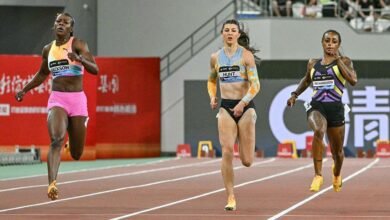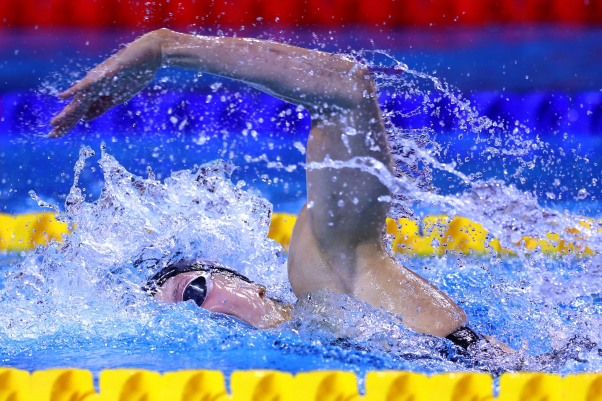
The women’s swimming world championships 2026 will take place in Beijing from 1 to 6 December 2026. World Aquatics lists the official title as the World Aquatics Swimming Championships (25m) 2026. World Aquatics expects more than 1,000 athletes from over 200 countries and regions. They will compete across six days of short-course racing.
Women’s Swimming World Championships 2026 History And Context
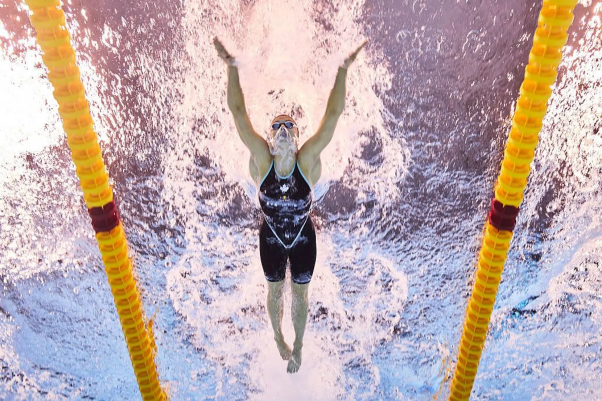
To understand why Beijing 2026 matters, it helps to start with the history. World Aquatics formally recognised world records in 25m pools in 1991. The first short-course world championships followed in Palma de Mallorca in 1993. Beijing 2026 is therefore the 18th edition. The championship rewards speed, turns and underwater precision as much as endurance.
China also brings real championship history to this meet. World Aquatics says 2026 will be the third time China has staged the short-course championships. Previous hosts were Shanghai in 2006 and Hangzhou in 2018. However, Beijing will host this event for the first time. The governing body also pointed to Beijing’s record of hosting major aquatics events and its wider Olympic history when it awarded the competition.
The immediate backdrop is Budapest 2024, which reset expectations for what short-course worlds can look like. World Aquatics reported 30 world records and 13 world junior records across six days. Swimmers also set 46 championship records and 63 continental records. In total, 985 athletes from a record 195 countries competed in 45 medal events. Beijing arrives with that standard hanging over it.
When And Where Is Beijing 2026?
The core facts are straightforward. The championships run from 1-6 December 2026 in Beijing, China. At the time of writing, however, the official schedule page lacks detailed competition data. Daily session plans will need updating once World Aquatics publishes the full schedule.
What is already clear is the format. This is a 25m short-course world championship, not the long-course World Aquatics Championships held in a 50m pool. Short-course swimming places greater value on starts, turns, breakouts and underwater work. As a result, swimmers race sprints and medleys differently.
Women’s Swimming World Championships 2026 Qualification Guide
World Aquatics has already published the qualifying bulletin, and it gives this event hub real substance. Swimmers must achieve entry times at a World Aquatics-approved qualification meet. They can use either a 25m or 50m pool. The qualifying window runs from 27 July 2025 to 15 November 2026. World Aquatics also says the Beijing 2026 “A” standards were set using whichever was faster: the Budapest 2024 “A” standard or the 16th-place prelim time from Budapest 2024.
For the women’s programme, the published standards cover 18 individual events, from the 50m freestyle through to the 400m individual medley. In 25m pools, examples of the women’s “A” cuts include:
In 50m pools, the women’s “A” marks include:
That framework tells us two useful things. First, Beijing 2026 will reward depth. Many cuts reflect the times needed to reach the top 16 in Budapest. Second, swimmers and federations have a long qualifying window. However, it closes just over two weeks before the championships begin.
The Main Women’s Storylines To Watch
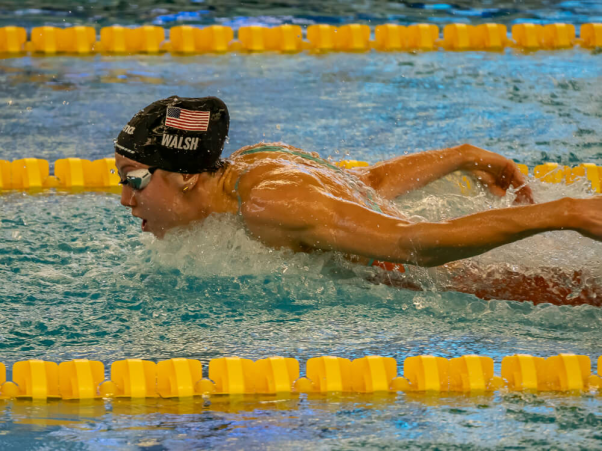
Any women’s preview starts with Gretchen Walsh. At Budapest 2024, Walsh won seven short-course world titles. She finished with 11 world records in total, including nine individual marks. She stayed sharp on the 2025 World Cup circuit. World Aquatics credited her with a 23.72 world record in the 50m butterfly. She also set multiple World Cup records in butterfly and medley events. In a short-course environment built around explosive skill, Walsh is the defining benchmark.
Summer McIntosh gives the meet its widest event range. World Aquatics named McIntosh its 2025 female swimmer of the year. She won four world titles in Singapore and added bronze in the 800m freestyle. By year-end, she had three world records and four short-course world crowns on her résumé. She is therefore a threat across freestyle, butterfly and medley events. That range can shape a world championships programme.
Kate Douglass remains one of the clearest short-course specialists in the women’s field. In Budapest, Douglass drove the 200m breaststroke world record down to 2:12.50, then backed up her status on the 2025 World Cup circuit with more world-record-level sprinting and freestyle work. If Beijing produces another fast pool, Douglass will again sit near the centre of it.
China’s Challenge And The Distance Events
For the host nation, Tang Qianting is an obvious name to track. Tang won the 100m breaststroke world title in Doha 2024 in a Chinese record 1:05.27. World Aquatics later highlighted her Asian-record swims on the 2024 World Cup circuit. Home meets do not guarantee medals, but Tang gives China a proven contender in one of the most competitive women’s events on the programme.
Distance swimming should also carry real weight. World Aquatics’ 2025 performance review highlighted Lani Pallister’s 7:54.00 short-course world record in the 800m freestyle, while Singapore 2025 underlined Katie Ledecky’s continued authority after she won a seventh world 800m title in a championship-record 8:05.62. Whether those races land in short-course or long-course settings, the women’s distance picture heading into Beijing is deep and high level.
What To Track Between Now And The Meet
The next major checkpoint is the 2026 World Aquatics Swimming World Cup, which runs through Baku, Tashkent and Astana in October. World Aquatics describes that Silk Road tour as the ideal lead-in to Beijing. It should therefore offer a useful form guide before the championships.
For fans, the smart move is simple: watch the official competition page for the full session schedule, qualification rankings and athlete entries. The main event details are set. However, start lists and session times will reveal the daily shape of the meet.
Beijing 2026 already looks strong as an event hub because the essentials are in place: a confirmed host city, confirmed dates, published qualification standards and a women’s field led by proven champions and record-holders. Once the official schedule appears, this has every chance to become the definitive guide for readers tracking the women’s side of the meet.
Bookmark this page for schedule updates, final entry lists and a full women’s event-by-event preview closer to Beijing 2026.