Five Iranian Women Footballers Granted Humanitarian Visas In Australia After Anthem Protest and Safety Fears
Players Receive Protection in Australia Following National Anthem Protest Amid Safety Concerns Back Home
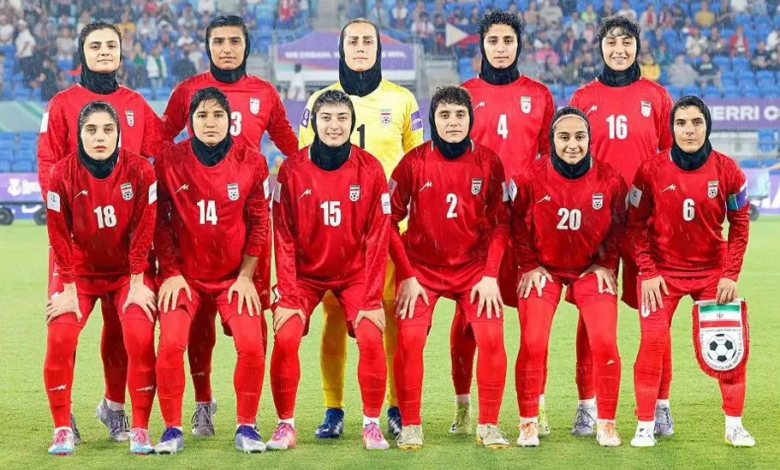
Five members of the Iranian women’s national football team have been granted humanitarian visas in Australia after fears for their safety emerged following the team’s refusal to sing Iran’s national anthem at the AFC Women’s Asian Cup 2026. The visas, announced early on 9 March 2026, allow the players to live, work and study in Australia as they decide their next steps, according to the Australian government.
The players at the centre of the situation are Fatemeh Pasandideh, Zahra Ghanbari, Zahra Sarbali, Atefeh Ramazanzadeh and Mona Hamoudi. They were moved to a secure location on the Gold Coast under the protection of Australian Federal Police (AFP) while their applications were processed, Home Affairs Minister Tony Burke told reporters. Other squad members have been informed they may seek similar assistance if they wish.

Australian Government Confirms Humanitarian Visas
Australia’s Minister for Home Affairs, Tony Burke, confirmed that the visas were finalised at around 1:30 a.m. Australian Eastern Daylight Time on 9 March. At a press conference in Brisbane, Burke said the women “are safe here, and they should feel at home here.” He emphasised that the process began with discussions between officials and the players, and that security agencies including the Australian Security Intelligence Organisation (ASIO) had been involved in vetting.
Burke added that any other team members who wish to remain in Australia “have the opportunity to speak to Australian officials if they wish to.” The visas provide a pathway to permanent residency if the recipients choose.
Prime Minister Anthony Albanese also addressed the matter, describing the situation as “very delicate” and saying Australians have been “moved by the plight of these brave women.” He reiterated that assistance would be provided to others in the team who express a desire to seek protection.
International Attention and Political Reactions
The case drew international attention, including from former United States President Donald Trump, who posted on Truth Social urging Australia to grant asylum to the players. Trump wrote that Australia was “making a terrible humanitarian mistake” if the team were forced to return to Iran, where he claimed they would “most likely be killed” — a warning that amplified global concern but was not independently verified. He further stated that the US would take the players if Australia did not.
The Australian government has not stated that returning players would face execution, but has acknowledged credible safety concerns raised by rights groups and supporters.
Support From Players’ Union and Human Rights Advocates
FIFPRO, the global representative organisation for professional footballers, said it was “very concerned” for the wellbeing of the Iranian players. Beau Busch, FIFPRO’s president for Asia and Oceania, said the union had struggled to communicate with the players and was working with FIFA, the Asian Football Confederation (AFC) and Australian authorities to ensure they had “agency around what happens next.”
In a statement, FIFPRO noted that some players may wish to return home, while others might prefer to remain in Australia or pursue asylum. The union’s response followed online petitions calling for Australia to protect the team, which garnered tens of thousands of signatures.
Amnesty International Australia and prominent human rights campaigners also supported calls for protective options, emphasising that no athlete should be pressured to return to a situation where they fear for their safety.
Anthem Controversy and Iranian Reaction
The anthem dispute began on 2 March 2026, when the Iranian squad refused to sing their national anthem before their first match against South Korea in the AFC Women’s Asian Cup. Iranian state television later described the act as a “pinnacle of dishonour,” and a presenter labelled the players “traitors,” escalating domestic pressure.
Iran’s subsequent matches — including their final group game, a 2–0 loss to the Philippines — featured the team singing and saluting during the anthem, a move some observers interpreted as compliance under delegation supervision. However, the initial protest attracted significant attention and concern from expatriate Iranian communities and human rights groups.
Marziyeh Jafari, head coach of the Iranian side, reiterated in post‑match comments reported by Australian media that the players were “eager to come back” to their home country, reflecting a divide between athletic ambition, loyalty, and personal safety considerations.
Supporters and Australian Community Response

Footage and eyewitness accounts shared with the BBC and local outlets described federal police escorting some players through hotel corridors under heightened security.
Members of the Iranian‑Australian community expressed deep concern about the players’ futures, with many supporting calls for humanitarian options. One community representative told the ABC that the uncertainty around potential consequences back in Iran was a key factor driving advocacy efforts.
Official Football Bodies Respond
FIFA released a statement saying the safety and security of all participants at the Women’s Asian Cup is a priority and that it was in close contact with relevant authorities, including Football Australia, to monitor the situation.
The AFC, which organises the Women’s Asian Cup, also reiterated its commitment to participant welfare but did not provide a detailed public position beyond this general assurance.
Tournament Context and Next Steps
Iran’s exit from the AFC Women’s Asian Cup came in the group stage after results in matches against South Korea, Australia and the Philippines. The team’s campaign highlighted both sporting challenges and broader cultural pressures faced by women’s teams from nations with restrictive athletic and civic norms.
The remaining squad members still in Australia can choose to stay and pursue visa pathways or return home once travel plans are finalised. Australian authorities have indicated that options remain open for those who express a desire for support or protection.
Why This Matters
The situation involving the Iranian women’s football team underscores the complex intersection of sport, human rights and international policy. Athletes often serve as public faces for national identity, yet they can find themselves embroiled in geopolitical tensions beyond their control. The humanitarian visa decision — grounded in credible safety concerns — reflects how host nations and sport governing bodies are increasingly called upon to balance competition with protection.