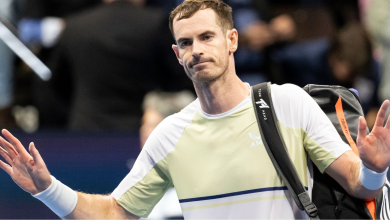
Top 10 Women Tennis Players Of All Time: Who Is The Best Women Tennis Player Ever?
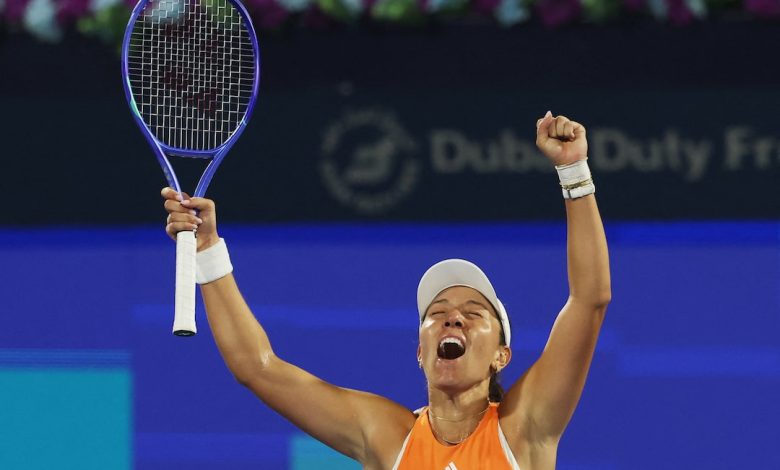
The best women tennis player ever depends on criteria: Serena Williams leads the Open Era with 23 Grand Slam singles titles, Steffi Graf holds the record for most weeks at No. 1 (377), and Margaret Court has the most total majors (24). All three have legitimate claims to the title.
The argument usually comes down to what you value most: major singles titles, time spent at world No. 1, peak dominance, or how completely a player could win on every surface. There is no official “GOAT” trophy in tennis, so the cleanest approach is to be transparent about the criteria and honest about the trade-offs.
This ranking lists the top 10 women tennis players of all time using the most consistent measures we have across eras: major singles titles at the four Grand Slam tournaments, sustained time at the top, and the level of dominance shown in the biggest moments. The Open Era began in 1968, when amateurs and professionals could compete in the majors together, which matters fundamentally when you compare records across different periods.
How We Ranked The Top 10
We weighted three things most heavily:
- Major singles titles (Australian Open, French Open/Roland-Garros, Wimbledon, US Open/US Championships).
- Longevity at the top (especially time at world No. 1 where available).
- Peak level and versatility (winning across surfaces, beating elite fields, and sustaining dominance in multiple seasons).
Pre-1975 rankings were not tracked the same way as the modern WTA computer ranking system, so weeks-at-No.-1 data is strongest for the computer-ranking era. That is why this list leans on major titles and documented dominance when comparing earlier legends.
10. Suzanne Lenglen
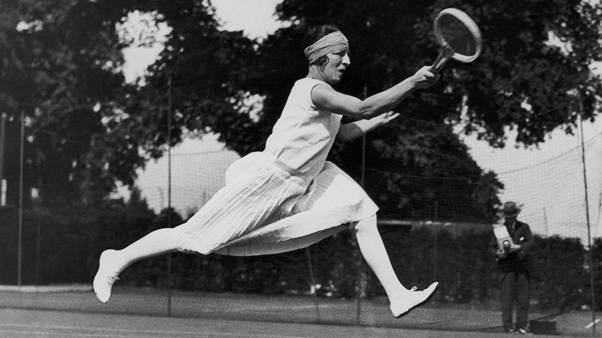
Career snapshot: 6 Wimbledon singles titles; French Championships titles after internationalisation; Olympic gold (1920) in singles and mixed doubles.
Before tennis had global television coverage, before million-dollar endorsements, before anyone used the term “superstar” in sports, there was Suzanne Lenglen. She is here because she was a phenomenon who helped define what stardom in tennis could look like.
Lenglen dominated the early 1920s with a style that still matters today: touch, placement, deception and speed, the kind of craft that holds up even in a more power-driven era. The International Tennis Hall of Fame credits her with a combined 21 major titles at the French Championships and Wimbledon across singles, doubles and mixed, plus Olympic success in 1920.
Lenglen’s legacy is foundational. She helped set the template for women’s tennis as a major spectator sport, drawing crowds that rivaled the men and proving that women athletes could command genuine cultural attention.
9. Helen Wills Moody
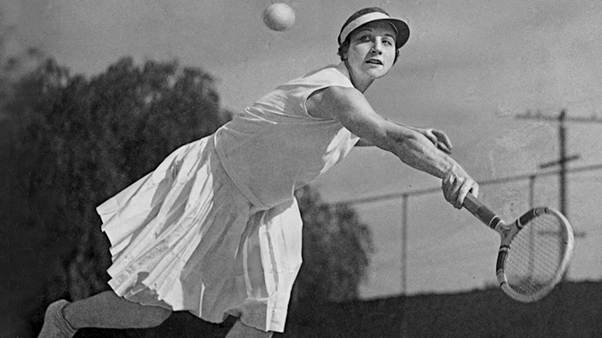
Career snapshot: 19 major singles titles; 31 major titles overall; Olympic singles and doubles champion (1924).
Helen Wills Moody was one of the pre-Open Era’s defining forces, a player whose dominance reads as modern even when you account for the differences in competition depth. The Hall of Fame highlights a 161-match win streak (including 141 straight matches without dropping a set) and notes she won 31 major titles overall, with 19 in singles.
Stylistically, she played with a ruthless simplicity: hit deep, hit hard, repeat, and do it with the composure that earned her a “poker face” reputation. In an era without today’s depth of international touring, she still produced a dominance that reads as modern.
8. Justine Henin
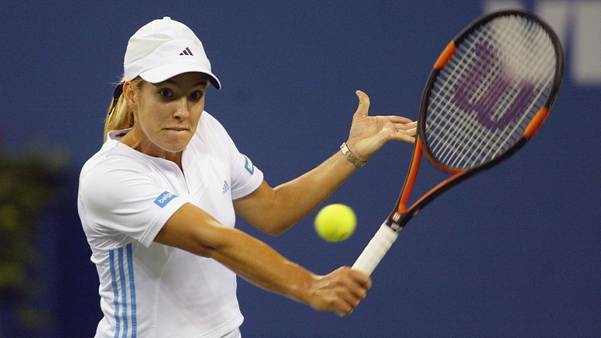
Career snapshot: 7 major singles titles; 117 weeks at world No. 1; Olympic gold medallist (2004).
At 5’5″, Justine Henin had no business dominating an era of power hitters. Yet her artistry made giants look clumsy.
Henin’s greatness is about variety: she could win points with spin, slice, pace changes, net play and, most famously, a one-handed backhand that held up under the heaviest pressure. The Hall of Fame records 43 singles titles, 117 weeks at No. 1, and a run in which she reached all four major finals in a single year (2006).
Even without a Wimbledon title, she reached finals there and won majors on clay and hard courts with markedly different tactical demands. Her early retirement at 25 in 2008, followed by an abbreviated comeback, remains one of tennis’s great “what ifs”, she left the sport while still at or near her peak, making her seven majors feel incomplete rather than definitive.
7. Monica Seles
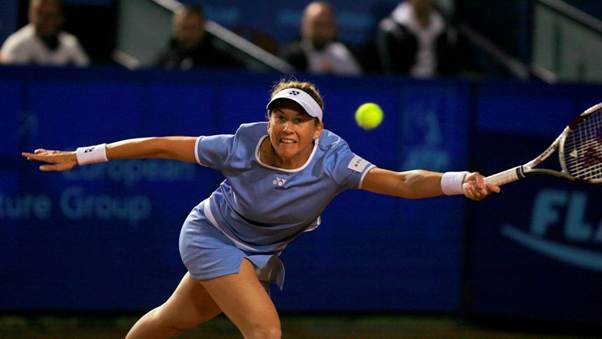
Career snapshot: 9 major singles titles; 178 weeks at world No. 1; distinctive two-handed power off both sides.
Monica Seles’ peak was ferocious. She took the ball early, hit heavy through the middle of the court, and controlled rallies with angles from both wings, a rare profile in any era. The WTA’s historical records list Seles with 178 weeks at No. 1, placing her among the most dominant modern champions by time at the top.
Between January 1991 and the Australian Open in 1993, Seles won eight of eleven Grand Slam tournaments she entered. She was 19 years old, seemingly on a path to rewrite every record in the sport. Then, on April 30, 1993, during a quarterfinal match in Hamburg, an obsessed Steffi Graf fan stabbed Seles in the back with a nine-inch knife. The blade plunged between her shoulder blades; had she not leaned forward to take a sip of water at that exact moment, doctors believed she would have been paralyzed.
The physical wound healed in months, but the psychological damage lasted years. Seles did not play tennis again until August 1995, missing ten Grand Slams during what should have been her prime. When she returned, she won the 1996 Australian Open and reached multiple finals, but she was never again the fearless, dominant force she had been before Hamburg. Martina Navratilova said it plainly in 2013: “We’d be talking about Monica with the most Grand Slam titles ahead of Margaret Court or Steffi Graf.”
Her career also sits at an inflection point tactically. She helped normalize the idea that overwhelming baseline power could win consistently at the highest level, even before the sport’s modern equipment boom fully arrived. That legacy, combined with what she accomplished before the stabbing, secures her place among the top 10 women tennis players of all time.
6. Billie Jean King
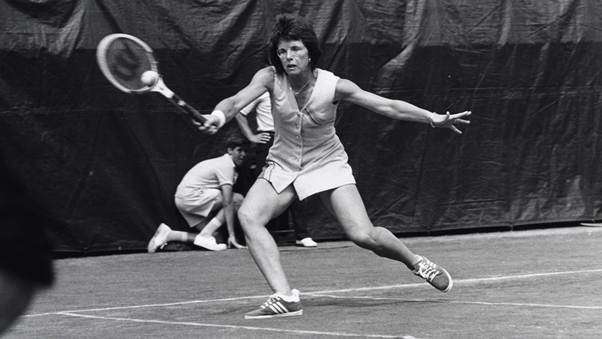
Career snapshot: 39 major titles overall; 20 Wimbledon titles across singles, doubles and mixed; a central figure in building modern professional women’s tennis.
Billie Jean King belongs on any list like this for two reasons: she was a great champion on court, and she changed the infrastructure of the sport. The Hall of Fame credits her as a founder of the Virginia Slims tour and a former President of the WTA.
On court, she played assertive all-court tennis, using speed, proactive shot selection and superb net instincts. Her Wimbledon record, 20 titles across disciplines, reflects both excellence and versatility. She won 12 Grand Slam singles titles and made tennis look like a game of aggressive geometry rather than baseline attrition.
If “greatest” includes impact, King’s influence is direct: without her, the shape of the modern women’s game looks different. She fought for equal prize money, built the organizational structures that allowed women’s tennis to become a legitimate professional sport, and did it while still winning at the highest level. That combination of on-court achievement and off-court transformation makes her essential to this list.
5. Margaret Court
Career snapshot: Record 24 major singles titles; 64 major titles overall across singles, doubles and mixed.
Margaret Court’s numbers remain staggering. The Hall of Fame credits her with 24 major singles titles, the most in history, plus a total of 64 majors across disciplines.
Her best tennis blended physicality, net pressure and overwhelming conditioning for the era. She also bridged amateur and Open Era competition, which adds complexity when comparing directly with later players, but does not reduce the scale of her dominance across a long competitive span.
Court won 11 majors in the Open Era, including the calendar-year Grand Slam in 1970 at age 28. She remained competitive into her early thirties while managing a professional career and motherhood, a combination that few players of her generation attempted. Her record still stands as a benchmark, even if the question of how to weight amateur-era titles against Open-Era titles remains unresolved.
4. Chris Evert
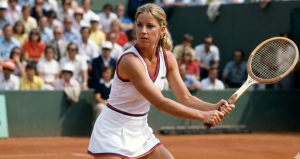
Career snapshot: 18 major singles titles; 260 weeks at world No. 1; record seven French Open singles titles.
Chris Evert is the blueprint for controlled aggression: she absorbed pace, redirected calmly, and turned matches into exercises in error management, except she did it while winning big points, for years, against every kind of opponent.
Her records underline the scale of consistency. The Hall of Fame notes 18 major championships, 260 weeks at No. 1, and a run of winning at least one major singles title for 13 straight years (1974–1986).
And on clay, she set a standard: seven French Open singles titles is a women’s record. When people talk about “surface specialists” at an all-time level, Evert is the reference point. Her rivalry with Martina Navratilova, which lasted 14 years and spanned 80 matches, elevated women’s tennis to a new level of cultural relevance and proved that women’s matches could generate the same drama and attention as the men’s game.
3. Martina Navratilova
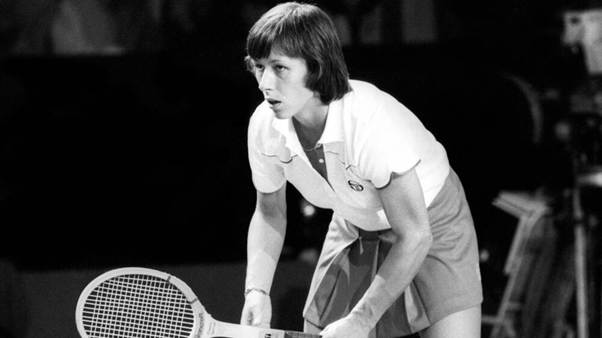
Career snapshot: 18 major singles titles; 332 weeks at world No. 1; record 9 Wimbledon singles titles; one of the most decorated doubles players in history.
Martina Navratilova defined what elite preparation could look like in tennis. She played attacking tennis with a serve-and-volley blueprint, but the bigger legacy is how she made athleticism and fitness central to sustained excellence.
Her Wimbledon record tells you plenty: nine singles titles, spread across more than a decade (1978–1990), showing both grass-court mastery and an ability to keep evolving. She won 59 Grand Slam titles across all disciplines, second only to Margaret Court in tennis history. She won 18 major singles titles overall, matching Chris Evert’s total, but the scope of her achievement extends far beyond singles. The Hall of Fame credits her with 332 weeks at No. 1 in singles and massive doubles achievements, including 31 women’s doubles majors and 10 mixed doubles majors, making her one of the sport’s most complete champions across disciplines.
2. Steffi Graf
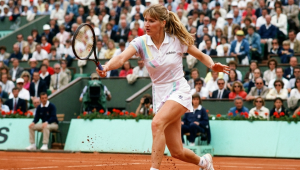
Career snapshot: 22 major singles titles; 377 weeks at world No. 1 (the all-time record); 1988 calendar-year Grand Slam + Olympic gold.
Steffi Graf’s case is built on a rare blend: a historically great peak and a historically long reign. The Hall of Fame credits her with 377 weeks at No. 1, more than any player, women or men, and a women’s-record 186 consecutive weeks at the top (tied with Serena Williams).
Tactically, Graf won with speed, point construction and a forehand that could end rallies from neutral positions. She could defend like a counterpuncher, then flip the rally with one inside-out strike. That adaptability, and a major record that spans every surface, is why she remains a top-two fixture in most “all-time” arguments.
In 1988, Graf achieved something no player before or since has accomplished: the “Golden Slam,” winning all four major singles titles and the Olympic gold medal in the same calendar year. That season alone would define most careers. Graf sustained that level for nearly a decade.
If you prioritize sustained ranking dominance combined with major titles across all surfaces, Graf has the strongest claim to being the best women tennis player ever.
1. Serena Williams
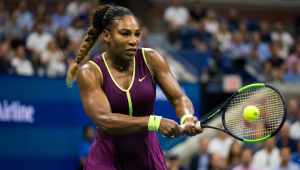
Career snapshot: 23 major singles titles; 73 singles titles; 319 weeks at world No. 1.
Serena Williams sits at the centre of the best women tennis player ever debate because she combined generational power with elite movement, defence, and an all-time return game. Her serve reliably created “free points”, but her real edge was how she applied pressure from the first strike and then refused to give ground in extended rallies. At her best, she could win points in ways that felt inevitable.
What separates Williams from many greats is the breadth of her winning windows. She won her first major at the 1999 US Open at age 17, and her last at the 2017 Australian Open at age 35 (while two months pregnant). That 18-year span across multiple phases of the sport’s tactical evolution, from flatter, first-strike hard-court tennis to heavier-spin baseline exchanges, shows an ability to adapt and dominate across generations of opponents.
Williams’ 23 major singles titles are the most in the Open Era. She spent 319 weeks at world No. 1, third-most all time. She won on every surface, against every style of opponent, and remained a threat at majors into her late thirties. If you ask which player dominated the Open Era most completely, the answer is Serena Williams.
Best women tennis player ever: The cleanest way to answer
If you want a single name, you have to define the lens first.
- Open Era singles majors & longevity: Serena Williams has the strongest claim with 23 major singles titles and sustained elite performance across multiple generations of opponents and tactical shifts.
- Peak dominance & ranking supremacy: Steffi Graf’s 377 weeks at No. 1 and the only Golden Grand Slam make her argument exceptionally strong.
- All-eras major singles total: Margaret Court’s 24 singles majors remain the all-time record, while also spanning very different competitive structures across decades.
A fair conclusion is this: Serena Williams is the best women tennis player ever in the Open Era, while Graf and Court remain the two most serious alternatives depending on whether you prioritise rankings dominance or total majors across eras.
Honourable mentions
A top 10 inevitably leaves out champions with legitimate all-time resumes. Venus Williams, with seven major singles titles and sustained excellence across two decades, belongs in any extended conversation. Evonne Goolagong’s record includes seven major singles titles and 18 major singles finals, which is a top-10-level profile by any measure.
You can also make strong arguments for players such as Martina Hingis (peak ranking longevity and tactical brilliance), Arantxa Sánchez Vicario (consistent excellence across all surfaces), and later-era multi-slam winners like Naomi Osaka and Iga Świątek, who are still building their legacies but have already shown the talent to belong in future versions of this conversation.
The depth of women’s tennis history means that any list of the top 10 women tennis players of all time will leave someone out who deserves mention. That is the cost of trying to rank greatness. The reward is the conversation itself.