From 39 Double Faults to Grand Slam Champion: How Sabalenka Fixed Her Serve
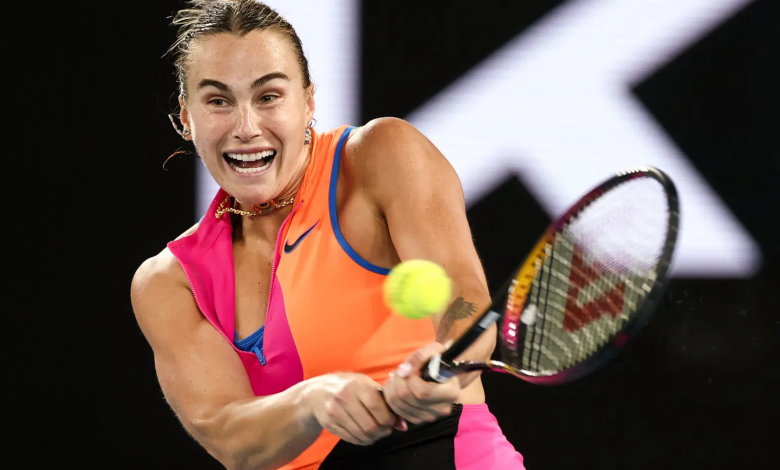
The tears came during the changeover. Aryna Sabalenka sat in her chair at Adelaide International 2022, having just served 21 double faults in a single match. The crowd’s sympathetic applause made it worse. Everyone knew they were witnessing a professional athlete’s nightmare playing out in real time.
Two days earlier, she’d hit 18 double faults in her opening match. The previous season, Sabalenka had served 428 double faults across the entire tour, the most of any player. Now, in January 2022, she couldn’t even get the ball in play. In desperation, she resorted to serving underarm, breaking tennis’s unwritten rules because the alternative, another crushing defeat built on serving failures, seemed worse, as reported by ESPN.
Fast-forward to 2026, and Sabalenka’s serve has become one of women’s tennis’s most feared weapons. She strikes aces at will, wins service games at elite rates, and uses her first delivery to set up devastating forehand winners. The transformation from broken server to Grand Slam champion stands as one of modern tennis’s most remarkable comeback stories.
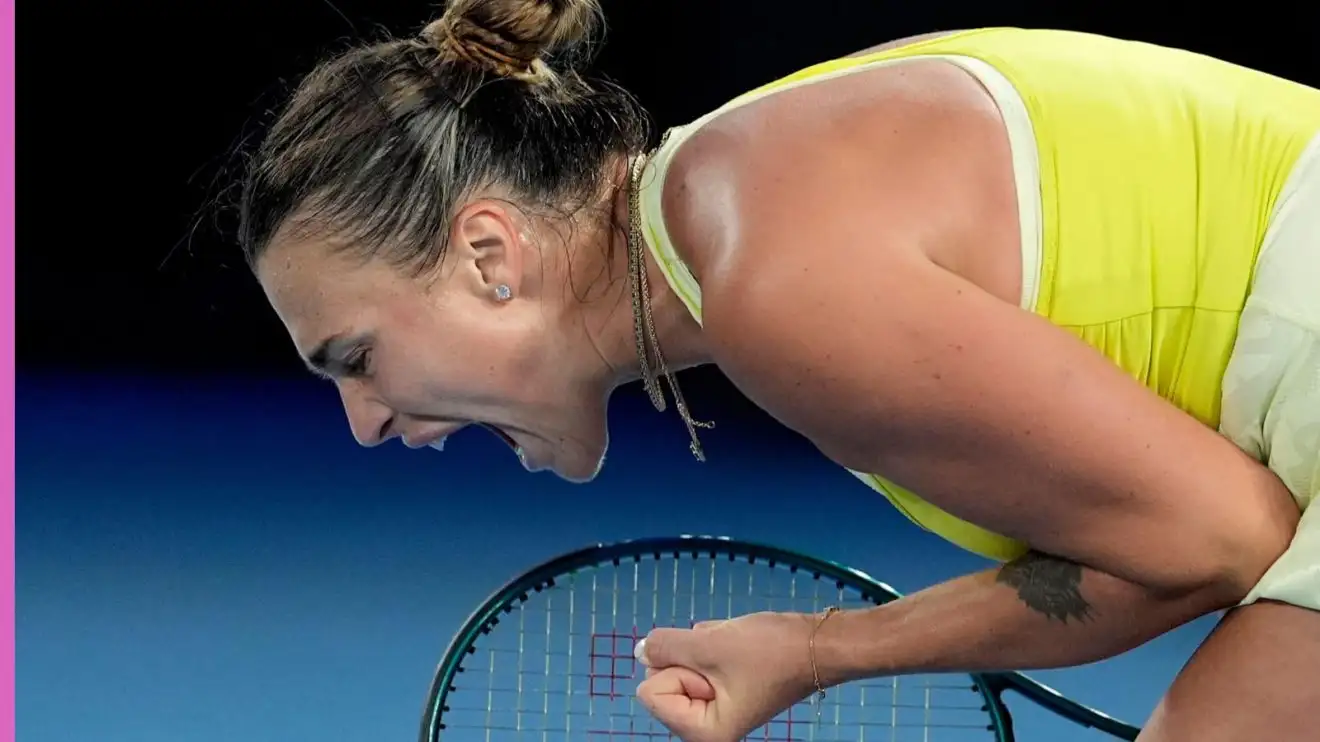
The Crisis: When the Serve Disappeared
Adelaide 2022: Rock Bottom
The Adelaide International in January 2022 represented Sabalenka’s lowest professional moment. In her first match against Kaja Juvan, she served 18 double faults whilst winning in three sets. The victory felt hollow, she’d survived despite her serve, not because of it.
Two days later against Rebecca Peterson, the situation deteriorated further. Sabalenka double-faulted 21 times in a straight-sets defeat. The scoreline: 6-4, 7-6(3), suggested a competitive match, but the statistics told a different story. Her serve had become an active liability, gifting free points to opponents and destroying her confidence.
The desperation reached its peak when Sabalenka attempted underarm serves, hoping the unconventional tactic might break the mental spiral. “I was looking for a solution, for a way to fight,” she explained later to the WTA. “At that point, I would try anything.”
The Numbers Behind the Nightmare
Sabalenka’s 2022 serving statistics made for grim reading. She finished the season with 428 double faults, the most on tour. The number symbolised a fundamental technical breakdown that threatened to derail her career, as documented by WTA statistics.
The yips… that dreaded mental condition where athletes lose the ability to perform basic skills, had gripped Sabalenka’s serve. Her ball toss became inconsistent, her loading phase rushed, and her follow-through abbreviated. Each double fault fed the anxiety, creating a vicious cycle that no amount of practice seemed to break.
Opponents exploited the weakness ruthlessly. They sat back on return, knowing free points would come. Sabalenka’s powerful baseline game couldn’t overcome the constant handicap of starting 0-15 or 15-30 because of serving errors. Her ranking, once inside the top five, looked vulnerable.
The Mental Toll
Beyond the statistics lay crushing psychological damage. Sabalenka had built her game around aggression and power. The serve provided the platform for everything else, the heavy groundstrokes, the net approaches, the pressure she imposed on opponents. Without a reliable serve, her entire tactical approach crumbled.
“It was the worst period of my career,” Sabalenka later admitted. “I would wake up thinking about double faults. I would go to sleep thinking about them. The serve was in my head constantly, and not in a good way.”
Her coach Anton Dubrov offered to resign, taking responsibility for the technical breakdown. Sabalenka refused, insisting they solve the problem together. That decision proved crucial… continuity and trust would underpin the eventual recovery.
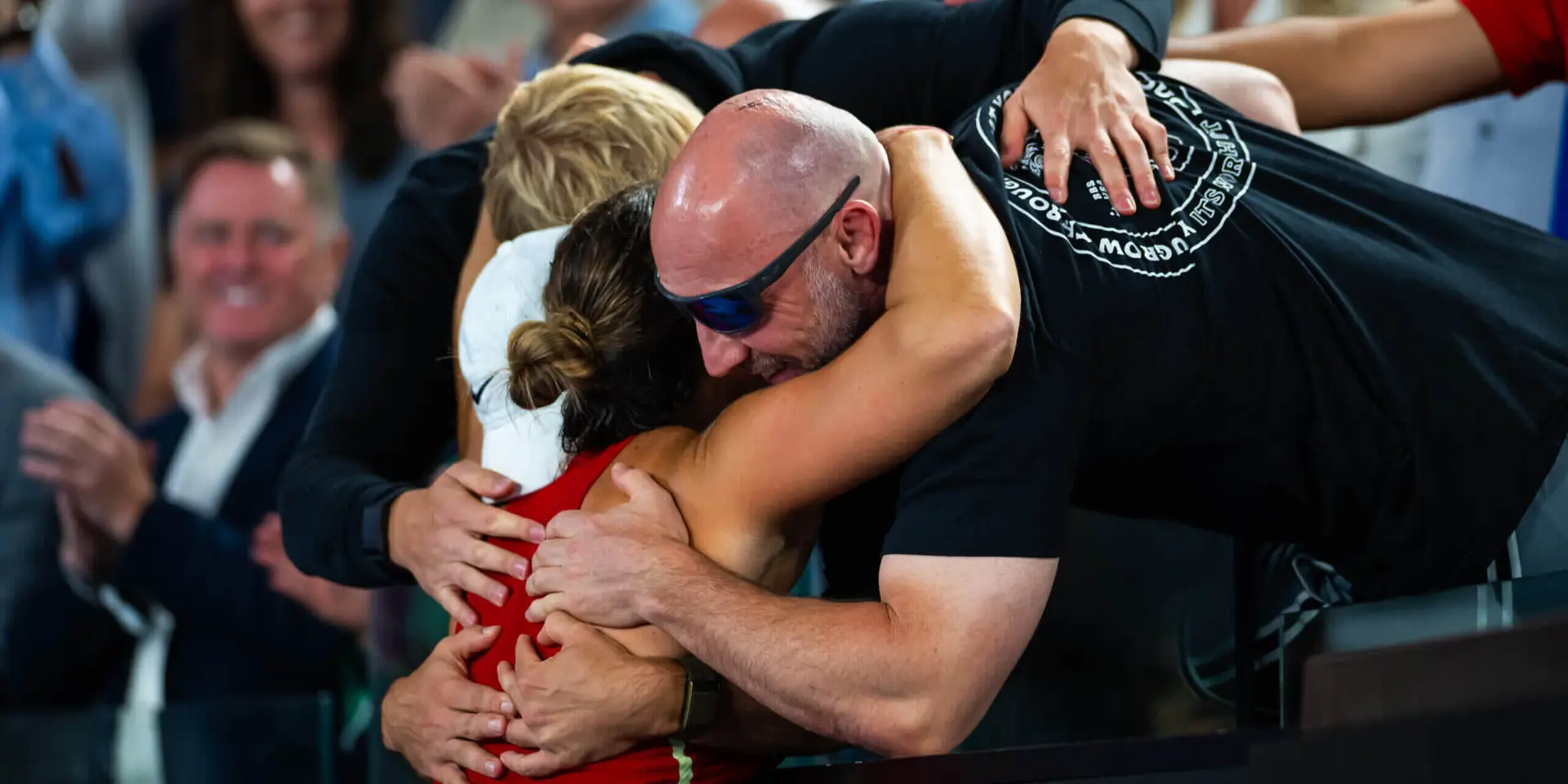
The Solution: Biomechanics Meet Mental Fortitude
Enter Gavin MacMillan
Mid-way through 2022, Sabalenka made a crucial decision: she hired biomechanist Gavin MacMillan to rebuild her serve from the ground up. MacMillan had worked with numerous elite athletes across different sports, bringing scientific rigour to technical problems. His appointment signalled Sabalenka’s willingness to accept that cosmetic fixes wouldn’t solve the crisis, as reported by Tennis.com.
MacMillan’s analysis identified multiple technical flaws. Sabalenka’s ball toss had become erratic, sometimes too far forward, other times too far behind her head. This inconsistency forced constant mid-serve adjustments that destroyed rhythm and accuracy. The loading phase, when a server coils before exploding upward, showed timing issues that affected power transfer.
“We had to strip everything back to basics,” MacMillan explained in a later interview. “Aryna’s natural power meant she’d developed compensatory movements that worked initially but created problems under pressure. We needed to build a serve that would hold up in Grand Slam finals, not just practice courts.”
The Biomechanical Changes
MacMillan implemented specific technical modifications designed to create consistency. The ball toss became more structured, with Sabalenka releasing the ball at a precise point every time. They worked extensively on her trophy position, the moment when the tossing arm extends fully and the racquet arm prepares to accelerate.
The loading phase received particular attention. Sabalenka’s tendency to rush this crucial phase had caused timing inconsistencies. MacMillan slowed down the entire motion, forcing her to establish rhythm before attempting speed. The mantra became “smooth, then fast” rather than “fast always.”
They also addressed her follow-through. Previously, Sabalenka would abbreviate the motion when anxious, yanking the racquet across her body prematurely. The new technique demanded complete extension and rotation, ensuring clean ball contact and spin generation. This change reduced frame contact, a major source of double faults, dramatically.
Mental Reconstruction
Technical fixes alone couldn’t solve the problem. The mental scar tissue from hundreds of double faults required different treatment. Sabalenka worked on pre-serve routines that created mental reset points between errors. She developed trigger phrases to refocus attention on process rather than outcome.
“The biggest shift was learning to accept double faults as part of tennis, not as personal failures,” Sabalenka explained. “Everyone double faults. The key is not letting one become five. I had to change my relationship with the serve entirely.”
She stopped obsessing over double fault statistics, refusing to check numbers mid-match. The mental energy spent catastrophising about potential errors got redirected toward tactical thinking. If a double fault came, she acknowledged it and moved on rather than dwelling on implications.
The Comeback: From Liability to Weapon
Early Signs of Progress
The improvements didn’t happen overnight. Through mid-2022, Sabalenka still experienced serving struggles, though the frequency decreased. Matches would feature long stretches of solid serving punctuated by brief relapses into double fault clusters. Progress came in fits and starts rather than smooth linear improvement.
By late 2022, the statistics began shifting noticeably. Sabalenka’s first-serve percentage climbed above 60%, a crucial threshold for winning service games consistently. Her double fault rate per match dropped from double digits to single digits in most encounters. More importantly, the catastrophic meltdowns disappeared entirely.
The 2023 Breakthrough
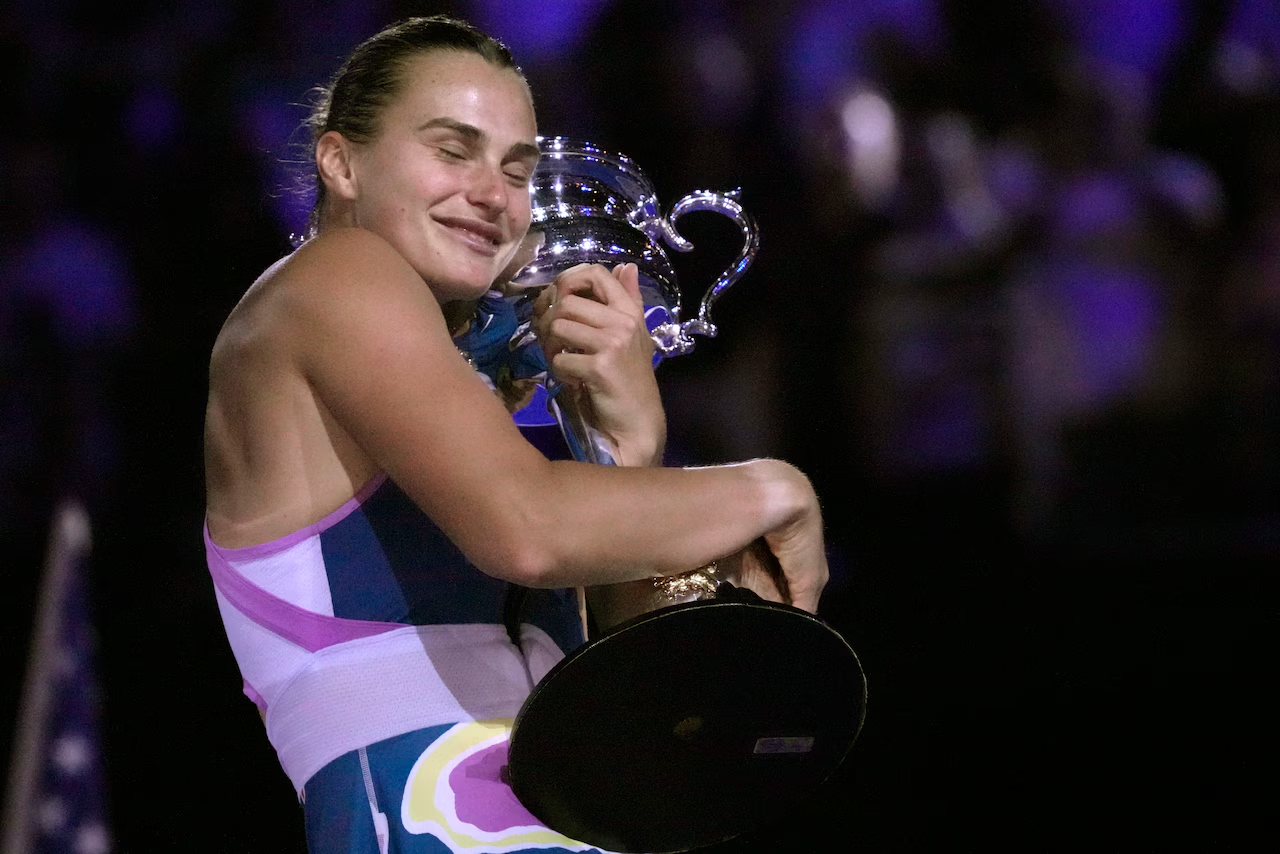
The 2023 Australian Open provided vindication for Sabalenka’s hard work. She served brilliantly throughout the tournament, using her improved delivery to control matches and pressure opponents. The final against Elena Rybakina tested her nerve, she double-faulted on her first championship point, threatening to trigger old demons, as covered by the Australian Open.
Instead of crumbling, Sabalenka regrouped and converted her fourth championship point. The victory represented more than her first Grand Slam title… it proved the serve could withstand ultimate pressure. The weapon that nearly ended her career had held firm when everything was at stake.
“That double fault on championship point could have destroyed everything,” Sabalenka reflected afterwards. “But I’d done the work. I trusted the process. I knew the next serve would be better, and it was.”
2024-2026: Elite Performance
By 2024, Sabalenka’s serve had evolved from recovered to elite. She struck 307 aces across the season, third-most on tour. Her service game win percentage reached 78.5%, ranking seventh amongst all WTA players. These weren’t just respectable numbers, they were elite statistics that placed her amongst the tour’s best servers.
The serve’s transformation became evident in pressure situations. At Indian Wells 2026, serving at 5-6 in the final set tiebreak after saving a championship point, Sabalenka unleashed an unreturnable serve to claim the title. The weapon that had betrayed her in Adelaide four years earlier delivered when she needed it most.
Her Brisbane 2026 victory showcased the serve’s reliability across an entire tournament. Sabalenka didn’t drop a set, using her serve to dominate service games and prevent opponents from establishing rhythm. The consistency from first match to final demonstrated how far she’d come from the Adelaide nightmare.
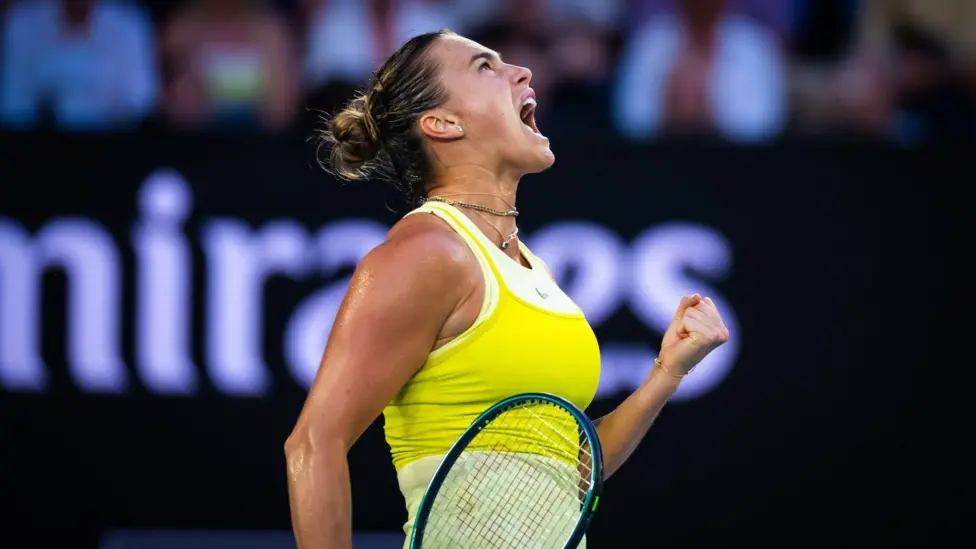
The Technical Breakdown: What Actually Changed
Ball Toss Consistency
The ball toss received the most dramatic overhaul. MacMillan established a release point based on biomechanical efficiency rather than feel. Sabalenka practiced the toss in isolation thousands of times, building muscle memory that would function under pressure. The height, placement, and rotation all became standardised.
Video analysis compared her pre-crisis toss with the rebuilt version. The difference was stark: the new toss placed the ball in virtually the same position every time, whilst the old version showed massive variation. This consistency eliminated the compensatory adjustments that had caused timing issues and frame contact.
Loading Phase Rhythm
The loading phase, when a server bends knees and prepares to drive upward, became more deliberate. Sabalenka’s rushed approach had disrupted power transfer from legs through core to arm. MacMillan slowed the entire sequence, emphasising rhythm over speed.
They implemented a count system: one for trophy position, two for knee bend, three for upward drive, four for contact. This structure prevented the rushing that had plagued her serve. Eventually, the counting became subconscious, but the rhythm remained ingrained.
Follow-Through Extension
Complete follow-through became non-negotiable. Sabalenka’s tendency to pull the racquet across her body prematurely especially under pressure, had caused wild misses and frame contact. The new technique demanded full extension toward the target before rotation.
This change improved accuracy dramatically. By ensuring clean ball contact in the racquet’s sweet spot, Sabalenka eliminated the unpredictable bounces and wild misses that had characterised her serving yips. The power remained, but control joined it.
Lessons for Other Athletes: What Sabalenka’s Story Teaches
Accept the Problem’s Severity
Sabalenka didn’t attempt superficial fixes or hope the problem would disappear naturally. She acknowledged the severity and committed to fundamental reconstruction. Many athletes waste months or years applying band-aids to problems requiring surgery.
Her willingness to hire a biomechanist rather than simply practice more demonstrated understanding that effort alone wouldn’t solve technical flaws. The yips required expert intervention, not just increased repetition of faulty mechanics.
Trust the Process
Progress came slowly and non-linearly. Sabalenka experienced setbacks and relapses throughout 2022 and early 2023. Lesser athletes might have abandoned the reconstruction and reverted to old mechanics. She persisted despite inconsistent results, trusting that improvement would come.
“There were days I wanted to quit,” she told The Guardian. “Days where the old serve felt easier than learning the new one. But Gavin and Anton kept reminding me that easy wasn’t going to win Grand Slams.”
Mental and Technical Work Must Align
Sabalenka didn’t rely solely on biomechanical fixes or purely mental approaches. She recognised that technique and psychology are intertwined. Better mechanics reduced anxiety, whilst improved mental management allowed her to execute new techniques under pressure.
Athletes facing the yips often make the mistake of treating symptoms rather than causes. Sabalenka addressed root technical issues whilst simultaneously building mental resilience. Neither approach would have succeeded alone.
Public Vulnerability Builds Strength
Sabalenka didn’t hide her struggles or pretend everything was fine. She openly discussed the yips, her frustration, and the work required to overcome them. This transparency probably helped, acknowledging the problem publicly created accountability and prevented denial.
Her willingness to serve underarm at Adelaide, whilst embarrassing in the moment, demonstrated pragmatism over ego. She tried everything, discarded what didn’t work, and eventually found solutions. Pride would have prevented such experimentation.
The Current State: Sabalenka’s Serve in 2026
In 2026, Sabalenka’s serve functions as a genuine weapon rather than a survived weakness. Her quarter-final victory over Naomi Osaka at Indian Wells showcased the serve’s tactical value. She won 82% of first-serve points, using the delivery to set up forehand winners and prevent Osaka from establishing baseline rallies.
The numbers tell the transformation story. From 428 double faults in 2022 to elite serving statistics in 2024-2026, Sabalenka has completed one of tennis’s most dramatic technical reconstructions. The serve that threatened to end her elite career now underpins her success.
More importantly, the mental scars have healed. Sabalenka approaches the service line with confidence rather than dread. Even when double faults occur, and they still do occasionally, she moves on without catastrophising. The yips no longer have power over her game.
The Lasting Legacy of Sabalenka’s Serve Comeback
Aryna Sabalenka’s serve transformation stands as modern tennis’s most compelling comeback story. From 428 double faults and public humiliation to Grand Slam champion with an elite weapon, the journey required technical reconstruction, mental fortitude, and unwavering commitment to improvement.
The story resonates beyond tennis. Any athlete who has faced the yips, lost confidence in fundamental skills, or watched their career threaten to unravel can draw inspiration from Sabalenka’s response. She didn’t hide, make excuses, or hope for natural recovery. She confronted the problem head-on with expert help and relentless work.
The Adelaide nightmare of January 2022 now serves as prologue rather than epitaph. Those 39 double faults across two matches represent the nadir from which Sabalenka built her championship career. Every ace she strikes, every service game she holds, every title she wins validates the difficult decision to rebuild rather than abandon her game.
For young players facing their own technical or mental crises, Sabalenka’s journey offers a roadmap. Accept the problem’s severity. Seek expert help. Trust the reconstruction process despite setbacks. Work on technique and psychology simultaneously. Persist even when progress seems impossible. The path from broken to brilliant exists… Sabalenka proved it.