Women’s Six Nations 2026: England Extend Record Winning Streak, France Dominate Italy And Scotland Edge Wales In Opening Round
England beat Ireland in front of a record 77,120 crowd at Allianz Stadium as France produce a second-half surge against Italy and Scotland secure a narrow win over Wales to open the 2026 championship.
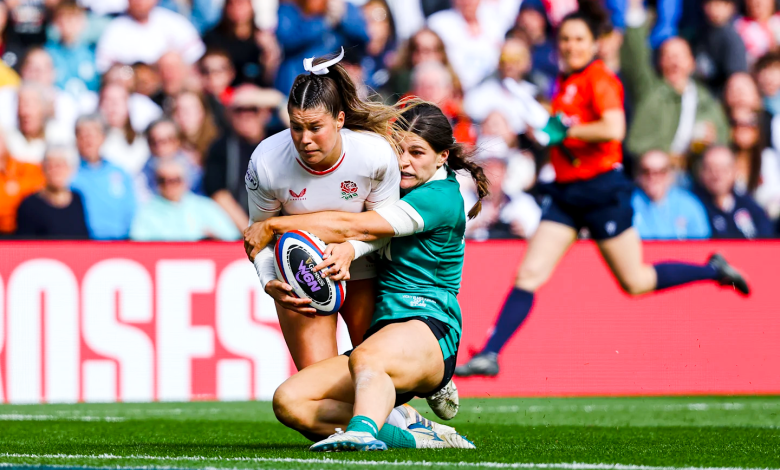
England stretched their winning streak to 34 matches with a 33–12 victory over Ireland in front of a record crowd at Allianz Stadium on 11 April, as France and Scotland also opened their 2026 Women’s Six Nations campaigns with wins. France overcame a slow start to beat Italy 40–7 in Grenoble, while Scotland secured a narrow 24–19 away victory over Wales in Cardiff.

According to Six Nations Rugby, the opening round set an early benchmark for title contenders England and France, while Scotland’s result strengthened their growing competitiveness in the championship.
England Power Past Ireland In Front Of Record Crowd

England delivered a commanding second-half display to defeat Ireland 33–12, extending their dominance in the competition and underlining their status as title favourites. The match drew a Women’s Six Nations record attendance of 77,120, according to BBC Sport.
The Red Roses built a 21–0 half-time lead through tries from Amy Cokayne and a double from Sarah Bern, with Helena Rowland converting each score. England’s forward pack controlled territory and set-piece exchanges, laying the foundation for sustained pressure.
Bern’s performance proved decisive, with the prop scoring twice from close range and consistently breaking Ireland’s defensive line. Analysis from Ruck identified Bern as the standout performer, highlighting her impact in both attack and defence.
England secured the bonus point early in the second half when Jess Breach finished a counter-attacking move, before Ellie Kildunne added a fifth try to complete the scoring. Despite the result, Ireland matched England 12–12 in the second half, reflecting improved attacking cohesion.
Ireland head coach Scott Bemand said his side showed resilience, telling BBC Sport: “There are positives in that second half.”

Captain Meg Jones emphasised England’s ability to adapt under pressure. “We found ways… that’s what winning teams do,” she said, according to Six Nations Rugby.

Head coach John Mitchell described the contest as “a real arm-wrestle”, citing injuries as a disruptive factor, via BBC Sport. Lock Morwenna Talling was forced off early in the second half, adding to concerns in England’s pack.
France Respond After Slow Start To Overpower Italy
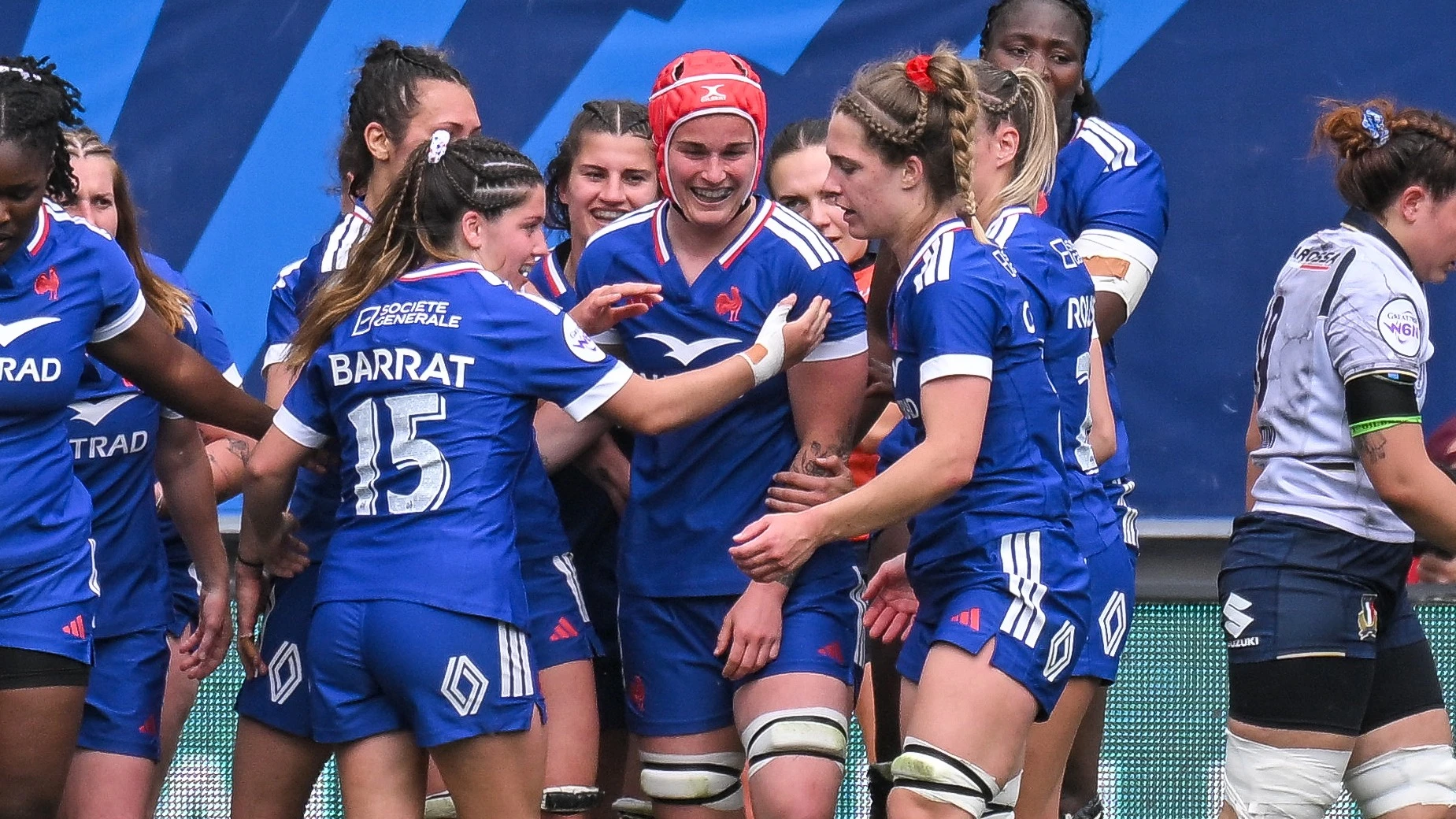
France recovered from a challenging first half to secure a 40–7 bonus-point win over Italy at Stade des Alpes.
According to Six Nations Rugby, Italy dominated early territory and forced France into heavy defensive work, but the hosts led 5–0 at the break after debutant Anaïs Grando crossed for the opening try.
France shifted momentum decisively after half-time, with Carla Arbez extending the lead before the forward pack asserted control. The hosts scored five second-half tries, capitalising on improved ball retention and attacking structure.
Player of the match Assia Khalfaoui played a central role in France’s turnaround, contributing to multiple scoring phases and anchoring a dominant scrum, according to Six Nations Rugby.
Statistically, France’s superiority emerged over time. The hosts finished with more than double Italy’s metres gained and significantly fewer tackles, reflecting improved territorial control in the second half, according to official match data.
Head coach François Ratier had warned pre-match that his side was still developing. “We are not the finished article,” he said, via Six Nations Rugby, a point reinforced by the contrast between France’s first- and second-half performances.
Italy’s early pressure and defensive organisation limited France initially, but they were unable to sustain that intensity. A late try from Gaia Buso provided a consolation score.
Scotland Hold Off Wales To Continue Narrow Winning Run
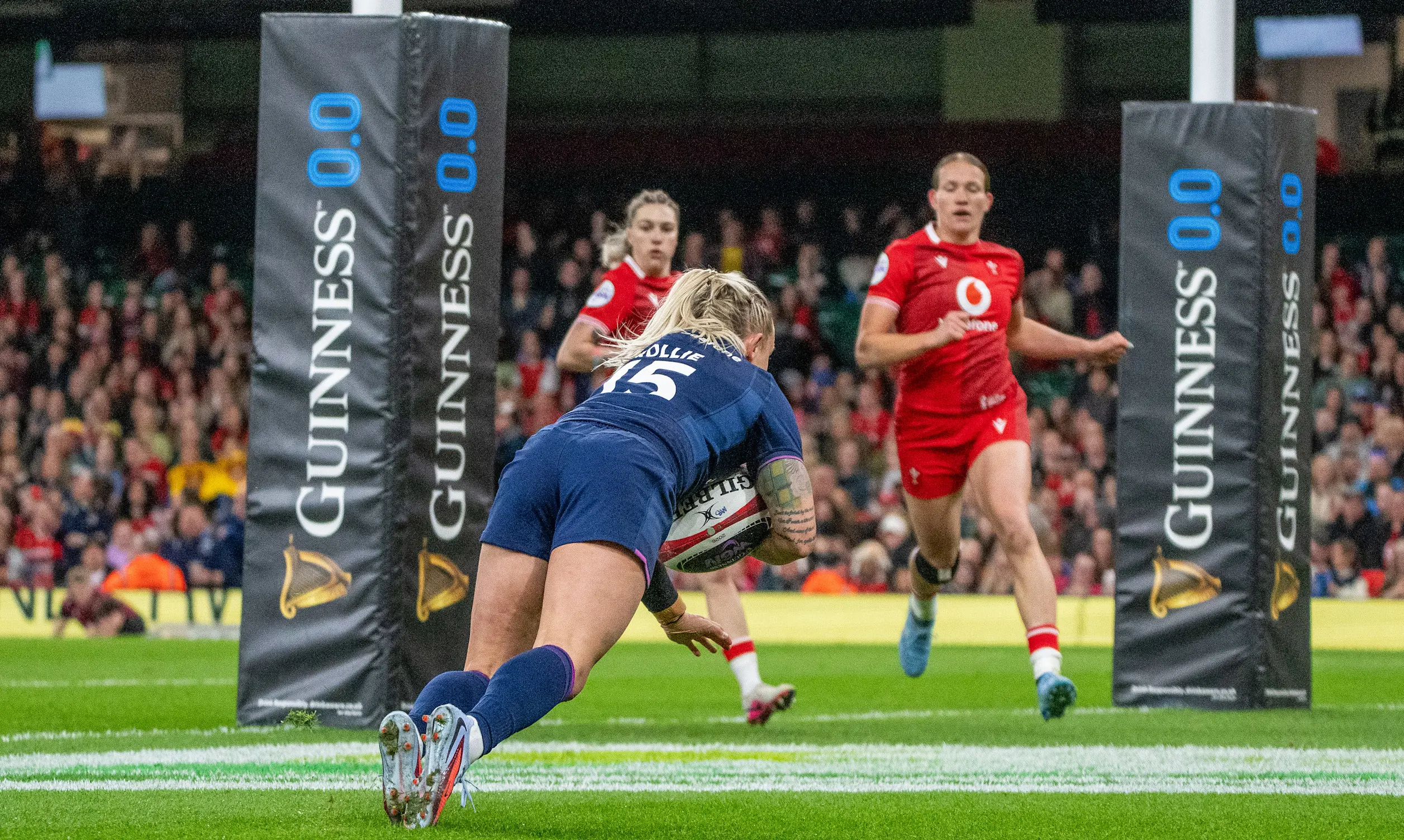
Scotland secured a hard-fought 24–19 victory over Wales at Principality Stadium, continuing a recent sequence of closely contested wins between the sides.
Wales led 12–10 at half-time after capitalising on home support and forward dominance, but Scotland responded strongly in the second half to overturn the deficit.
According to Six Nations Rugby, Scotland’s attacking efficiency proved decisive, with key contributions from experienced fly-half Helen Nelson guiding territorial control during critical phases.
The visitors capitalised on scoring opportunities more effectively than Wales, who struggled to convert pressure into points during the closing stages. Scotland’s defensive resilience in the final minutes secured the result.
Pre-match analysis from Six Nations Rugby had highlighted the fixture as evenly balanced, with Scotland having edged the previous two meetings by narrow margins. This result extended that trend and reinforced Scotland’s recent upward trajectory.
For Wales, the defeat continued a period of inconsistency despite strong individual performances and home advantage. Their forward pack, led by Sisilia Tuipulotu, provided a platform but lacked clinical finishing in key moments.
Early Statement In Title Race As Championship Takes Shape
The opening round of the championship reinforced England’s position as favourites for an eighth consecutive title, while France demonstrated their capacity to challenge despite early inconsistencies.
England’s blend of forward dominance and attacking depth once again proved decisive, although their second-half drop-off and injury concerns suggest areas for improvement. France’s performance highlighted both their attacking potential and the need for greater consistency.
Scotland’s victory positioned them as a strong contender in the middle tier of the competition, with their ability to secure narrow wins emerging as a defining strength.
The tournament continues next weekend, with England set to face Scotland in a key early test, while Ireland host Italy as both sides look to respond to opening-round defeats.
With record crowds, dominant performances and tightly contested fixtures, the 2026 Women’s Six Nations has begun with clear indicators of both hierarchy and growing competition across the field.