Australia and Japan Set for Women’s Asian Cup 2026 Final After Semi-Final Wins
Matildas and Nadeshiko set for a high-stakes showdown in Sydney after commanding semi-final performances

Japan and Australia booked their places in the AFC Women’s Asian Cup Australia 2026™ final after emphatic semi‑final performances at Stadium Australia on 18 March 2026, setting up a high‑stakes continental decider this Saturday night. Japan overwhelmed South Korea 4–1, while the Matildas edged China 2–1 to secure a showdown for the title and automatic qualification momentum ahead of the 2027 FIFA Women’s World Cup.
According to report from ABC News, Japan produced a commanding display from start to finish in their semi‑final against South Korea, while Australia battled to outlast China in a tight encounter, illustrating contrasting but equally effective paths to the final.
Japan Dominates South Korea to Reach Final
Japan’s advancing performance in this tournament was underscored by their 4–1 semi‑final win over South Korea on Wednesday night in Sydney, where they blended technical precision with relentless ball movement. The Nadeshiko have now scored in excess of 30 tournament goals with just one conceded prior to the Korea Republic match, according to Inside World Football.
Riko Ueki opened the scoring in the 15th minute, capitalising on a turnover and finishing with a composed side‑footed effort. Ten minutes later, Maika Hamano doubled Japan’s lead with a fierce strike that left South Korea’s goalkeeper with little chance. Japan’s veteran defender Saki Kumagai added a third with a header from a corner in the 75th minute, before Kang Chae‑rim pulled one back for the South Koreans three minutes later. Substitute Remina Chiba restored the three‑goal cushion in the 81st with a powerful low shot as Japan closed out the 4–1 result.
Despite being technically scored against, Japan’s consistency in attack demonstrates why they are among Asia’s elite sides this year. The team’s high‑pressing intensity and sharp passing patterns saw them outwork South Korea throughout.
Japan head coach Nils Nielsen praised his side’s professionalism and adaptability after the match, telling the Asian Football Confederation (AFC): “We tried to take a step up from the level we’ve shown … and we succeeded.”
South Korea coach Shin Sang‑woo acknowledged Japan’s superiority: “Our players did their best until the end … Japan are a really strong team,” he said through an interpreter, according to the AFC.
Aoba Fujino Emerges as Key Creative Force
One of Japan’s standout performers in the semi‑final was winger Aoba Fujino, who linked play seamlessly and caused South Korea constant problems with her movement. The Manchester City forward saw a first‑half goal ruled out for offside, but her overall influence was clear.
In a post‑match interview published on the AFC website, Fujino said her move to the Women’s Super League (WSL) had accelerated her development: “When I saw the game at the World Cup, I was determined to go abroad to have the environment to play and train … that is where the game is fast and more physical.”
Fujino’s international rise began in the WE League in Japan and continued through the FIFA U‑20 Women’s World Cup 2022, where she impressed, before earning promotion to the senior national squad.
Australia Overcomes China in Perth
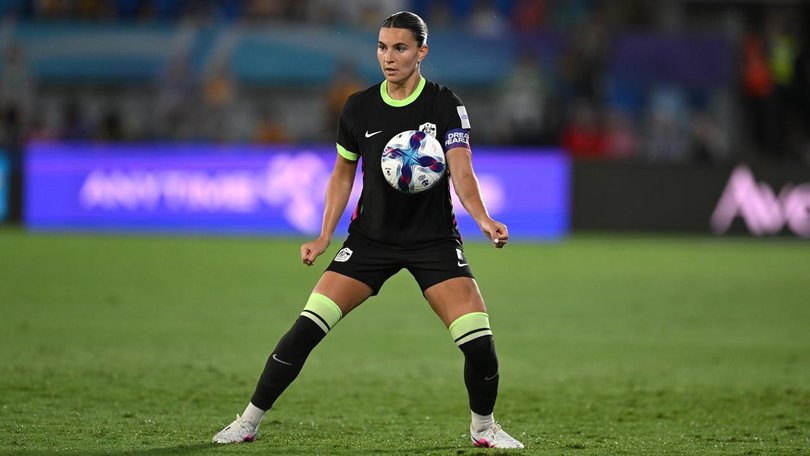
The Matildas booked their place in the final after a closely contested 2–1 victory over China in their semi‑final. Australia took the lead through Caitlin Foord in the 17th minute, finishing a well‑worked team move. China then equalised from the penalty spot before half‑time.
In the second half, Foord turned provider, releasing captain Sam Kerr with a perfectly weighted pass. Kerr rounded the goalkeeper and finished from a tight angle in the 58th minute to restore Australia’s advantage, securing the win and a spot in the title match, according to Man of Many.
Following the game, Foord reflected on the hard‑fought victory and Australia’s progression: “We deserved to be in the final,” she said in comments cited by the AFC.
Matildas vice‑captain Steph Catley told The Nightly that Australia’s defensive resilience had been a key factor throughout the tournament, adding that her team felt ready for the challenge ahead.
Historical Rivalry and Final Stakes
Japan and Australia share a competitive history in the Women’s Asian Cup. Japan has contested seven finals and lifted the trophy twice, both times at Australia’s expense in 2014 and 2018, according to Inside World Football. Australia, meanwhile, are appearing in their fifth final since joining the Asian Football Confederation and have won the title once, in 2010, reinforcing the significance of Saturday’s matchup.
Beyond continental honours, both teams have secured automatic qualification to the 2027 FIFA Women’s World Cup, with the top four teams from this tournament advancing directly.
Japan’s unique global pedigree as the only Asian team to have won the FIFA Women’s World Cup in 2011 adds further weight to their credentials ahead of the final. Australia, meanwhile, enter the match coming off a memorable run to the semi‑final at the 2023 FIFA Women’s World Cup on home soil.
Match Statistics: Semi‑Final Performances
Key performance numbers from Japan vs South Korea highlight Japan’s dominance:
-
Shots on goal: Japan 9; South Korea 1 (multiple match sources)
-
Total shots: Japan 21; South Korea limited in final third entries
-
Possession: Japan approximately 64% (according to ABC News)
-
Pass accuracy: Japan 88% (campaign data aggregated by ABC News)
Australia vs China semi‑final stats:
-
Goals: Foord (17’), Kerr (58’); China (penalty)
-
Combined team performance: Australia’s defensive organisation was crucial late in the game.
These figures help illustrate the tactical approaches that have underpinned both teams’ success.
Key Player Performances
Player Ratings: Semi-Finals
Japan 4–1 South Korea
| Player | Rating | Contribution |
|---|---|---|
| Riko Ueki | 8/10 | Scored opener; consistent link-up play. |
| Maika Hamano | 9/10 | Brilliant finish for second goal; constant threat. |
| Aoba Fujino | 9/10 | Dominated wide areas; disallowed goal in first half. |
| Saki Kumagai | 8/10 | Scored third; strong defensive organisation. |
| Remina Chiba | 7/10 | Impact sub; sealed the win with fourth goal. |
| Kang Chae-rim (KOR) | 6/10 | Scored consolation; limited by Japan’s press. |
| Goalkeeper Kim Min-jung (KOR) | 5/10 | Some saves, but exposed defensively. |
Australia 2–1 China
| Player | Rating | Contribution |
|---|---|---|
| Caitlin Foord | 8/10 | Scored first goal; assisted decisive second. |
| Sam Kerr | 9/10 | Calm finish under pressure; captain’s composure. |
| Ellie Carpenter | 7/10 | Key in build-up; solid defensively. |
| Mary Fowler | 7/10 | Contributed to early scoring chance. |
| Zhang Linyan (CHN) | 6/10 | Converted penalty; limited impact elsewhere. |
| China Goalkeeper | 6/10 | Several saves; beaten twice. |
Context and Tournament Overview
Japan entered the final as the highest-scoring side of the tournament, netting 30 goals in five matches while conceding just one prior to the semi-final (Inside World Football). Australia, by contrast, faced tougher opposition en route to the final, narrowly defeating North Korea and China, highlighting their ability to adapt under pressure.
The Matildas aim to capture their second Asian Cup title, having won in 2010, while Japan seek a third, having previously defeated Australia in 2014 and 2018 finals. Both teams have qualified automatically for the 2027 Women’s World Cup along with the other semi-finalists.
Tactical Insights
Australia relied heavily on Foord-Kerr combinations, with Catley emphasising defensive unity. Japan exploited wide spaces through Fujino and Hamano, using high pressing to dominate possession. Japan’s coach Nielsen rotated his squad effectively in the second half, giving impact players like Chiba crucial minutes to seal the result..
Looking Ahead: The Final
The AFC Women’s Asian Cup 2026™ final takes place on Saturday, 21 March 2026, 8:00pm AEDT at Stadium Australia, Sydney, with a kickoff at 20:00 AEDT. Fans can watch live coverage on Network 10 and stream via Paramount+.
Both teams will analyse semi-final performances to fine-tune strategies. Australia will aim to convert their defensive resilience into attacking opportunities, while Japan will focus on their high-tempo pressing and wide threats to exploit any lapses.
Beyond the trophy, the match represents a chance for Australia to claim a historic second continental title on home soil and avenge past final losses. For Japan, it’s an opportunity to reaffirm their status at the top of Asian women’s football and add further silverware to their extensive record.
Both teams head into the fixture with confidence. Japan have impressed with their fluid attacking football and disciplined press, while Australia have demonstrated resilience and adaptability throughout the tournament
Prize Money and Legacy
The total prize pool for the AFC Women’s Asian Cup remains USD 1.8 million, with the winners expected to receive USD 1 million. Despite calls for greater parity, the AFC maintains that increases in prize money depend on commercial growth and visibility of women’s football.
Players like Sam Kerr, Caitlin Foord, Riko Ueki, Maika Hamano, and Aoba Fujino have emerged as key figures, with performances in the semi-finals reinforcing their status as elite athletes in Asia and globall