FIFA Mandates Female Coaches Across All Women’s Competitions From 2026 in Landmark Equality Push
FIFA Implements Landmark Rule Mandating Female Coaches Across All Women’s Tournaments, Kicking Off With U‑17 Women’s World Cup Morocco 2026
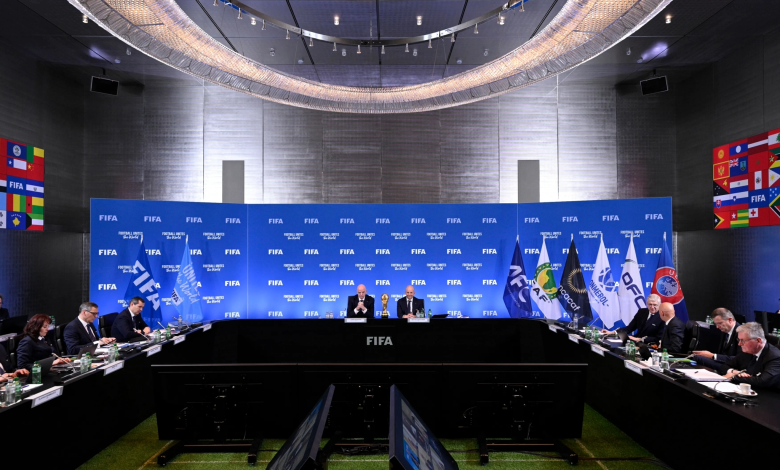
FIFA has approved historic regulations requiring female representation in coaching roles for every team in its women’s football tournaments, a move designed to accelerate gender equality in the sport and expand opportunities for women on the sidelines.
The decision, ratified by the FIFA Council on 19 March 2026, means every team participating in FIFA women’s competitions must include at minimum one female head coach or assistant coach, two female staff on the bench, and one female medical staff member. The rule will take effect immediately, beginning with the FIFA Under‑17 Women’s World Cup™, the FIFA Under‑20 Women’s World Cup™, and the FIFA Women’s Champions Cup™ later this year, with full enforcement at the 2027 FIFA Women’s World Cup™ set to take place in Brazil.
FIFA’s leadership says the reform is intended to expand the presence of women in technical and leadership positions across all levels of the women’s game, backed by investment into coaching education and global development programmes.
FIFA U‑17 Women’s World Cup Morocco 2026: Dates and Hosts
FIFA has officially confirmed that the FIFA U‑17 Women’s World Cup Morocco 2026 will take place from 17 October to 7 November 2026, according to ACL Sports. Morocco will host the tournament for the second time, as part of its unprecedented five-year hosting run spanning 2025–2029.
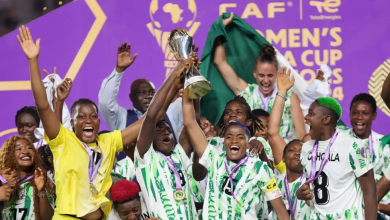
The 2025 edition in Rabat saw North Korea claim the title, defeating the Netherlands 3–0 in the final to secure a record fourth U‑17 crown. Nigeria’s U‑17 women’s team, the Flamingos—bronze medallists at the 2022 FIFA U‑17 Women’s World Cup in India—were eliminated in the Round of 16 after a 4–0 defeat to Italy.
Morocco qualifies automatically as hosts, while the remaining slots will be distributed across FIFA’s confederations: Africa and Europe will each have five teams; Asia, North and Central America, and South America will each send four teams; and Oceania will be represented by two nations.
Qualification tournaments are scheduled throughout 2026:
- Africa (CAF U‑17 qualifiers): First round 10–19 April; final phase 3–12 July.
- North and Central America (CONCACAF Women’s U‑17 Championship): 16–22 March.
- South America (CONMEBOL South American U‑17 Women’s Championship): 22 April–16 May.
- Asia (AFC U‑17 Women’s Asian Cup): 1–17 May.
- Europe (UEFA Women’s Under‑17 Championship): 4–17 May.
With dates confirmed, attention now shifts to these continental competitions, where teams will compete for a place at Morocco 2026.
FIFA’s New Rules: What Changes and When
Under the updated regulations approved at the FIFA Council meeting in Zurich, the following requirements will apply to all FIFA women’s competitions:
- At least one female head coach or assistant coach per team,
- Minimum of two female staff present on the team bench, and
- At least one female member of the medical staff for each squad.
(Source: FIFA)
FIFA’s Chief Football Officer Jill Ellis said: “There are simply not enough women in coaching today. We must do more to accelerate change”, underscoring the organisation’s intent to widen access to technical leadership roles for women.
These mandates begin with the youth tournaments later this year and apply globally across senior international tournaments and recognised club competitions under FIFA’s jurisdiction.
Historical Context: Women Coaches in World Football
The 2023 Women’s World Cup highlighted the scarcity of women in coaching roles: only 12 of 32 head coaches were female at the tournament hosted by Australia and New Zealand. (Source: FIFA historical tournament data)
That imbalance persists despite rapid growth in the women’s game — both in global participation and commercial investment. FIFA’s strategy combines regulatory change with development support aimed at expanding the pool of qualified female coaches worldwide.
Domestically, disparities are also evident. In England’s Women’s Super League (WSL) — one of the most professionalised women’s leagues globally — only four of 12 clubs currently have female head coaches. Analysis by BBC Sport suggested three of those clubs would comply with FIFA’s new rules under current staffing structures.
Development Pathways: Scholarships, Mentorship and Education
FIFA’s approach pairs the regulation with investment in coaching pathways and education. Key programmes include:
- Coach education scholarships, which have supported 795 female coaches across 73 FIFA Member Associations since 2021, allowing women to access advanced qualifications and licences.
- The Elite Performance: Coach Mentorship Programme, pairing experienced high-performance coaches with emerging female candidates globally.
- The Female Coach Educators’ Development Pathway, designed to train and grow the network of instructors who can develop the next generation of women coaches.
FIFA says these integrated programmes aim to strengthen both qualification levels and professional readiness for women seeking leadership roles.
In addition, clubs in England’s Women’s Super League 1 and 2 received scholarships tied to the inaugural Women’s Champions Cup 2026 to help female coaches complete UEFA Pro or A licences, part of a legacy education initiative.
Domestic League Responses: WSL and Beyond

In England, where the WSL remains one of the world’s leading women’s leagues, the new FIFA mandate has prompted commentary from coaches and administrators.
Arsenal manager Renee Slegers said the rule’s introduction is timely, adding that structural support is essential, even if progress takes time: “To give equal opportunity, sometimes you need to inject”.
Aston Villa head coach Natalia Arroyo described expanding female coaching representation as a “difficult subject”, but stressed the positive impacts of visibility and opportunity.
Manchester United manager Marc Skinner, speaking to BBC Sport, welcomed the mandate with a caveat that female coaches must be afforded space to grow into higher-level roles without undue pressure.
Goalkeeper Ellie Roebuck, who has worked under female coaches at club and international level, emphasised that coach effectiveness is rooted in capability: “It’s easy to form a relationship with them… equally with male coaches.” (Quote from BBC Sport)
Comparative Perspective: Global Coaching Representation
While FIFA’s decision sets a global benchmark, coaching representation varies significantly by region:
- In the National Women’s Soccer League (NWSL) in the USA, female head coaches have historically been more common but still a minority.
- In Division 1 Féminine (France), roles are similarly split, with several clubs employing female coaching staff but no league-wide mandate.
- Other growing leagues — including Germany’s Frauen‑Bundesliga and Spain’s Primera División Femenina, show increased female coaching appointments, but not yet to a consistent degree.
These variations underscore the importance of FIFA’s universal mandate in standardising expectations across continents.
Official Voices: Leadership Perspective
FIFA President Gianni Infantino reinforced the organisation’s commitment to gender equity at the UEFA Congress earlier in 2026, stating: “We should support more women in football positions”.
(Quote from ESPN report)
Infantino highlighted the broader benefits of expanding female participation in technical leadership, tying the initiative to football’s overall growth and inclusivity.
What Happens Next: Implementation and Compliance
With immediate effect for youth competitions later in 2026, teams preparing for the FIFA U‑17 and U‑20 Women’s World Cups must already align their coaching and support staff with the new regulations.
National associations and clubs will need to assess and adjust their staffing structures in advance of the FIFA Women’s Champions Cup and the 2027 Women’s World Cup in Brazil to ensure compliance.
FIFA has promised continued monitoring and reporting on progress, including tracking female coaching representation at upcoming tournaments and in developmental programmes overseen by member associations.
Accountability and Future Impact
The mandate marks one of the most significant regulatory shifts in women’s football governance in recent years. Analysts say its success will hinge not only on compliance but on development pipelines, education quality, and long-term cultural change within football institutions.
To that end, FIFA’s combined regulatory and educational strategy aims to shift female representation from isolated positions into a sustainable proportion across all levels, from grassroots to elite coaching.