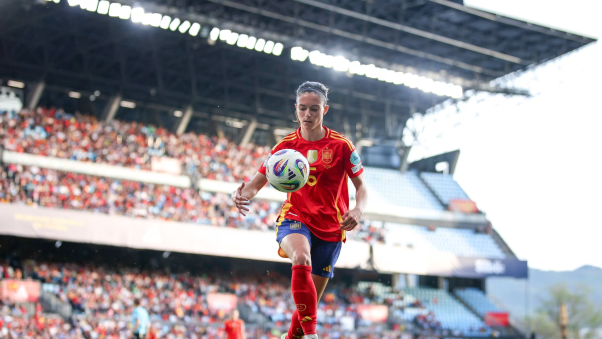
When Spain’s Aitana Bonmatí stepped onto the pitch at the 2025 Women’s Euros, she wasn’t supposed to be there.
Just days before the tournament, doctors rushed her to hospital with viral meningitis, a dangerous brain infection that can end careers. Most players would have withdrawn. Bonmatí recovered in time to play, led Spain to the final, scored a crucial extra-time goal against Germany, and won Player of the Tournament.
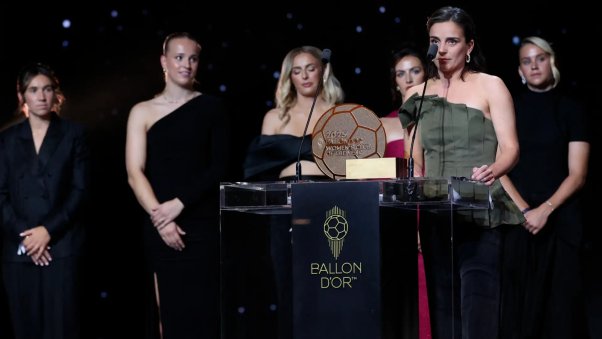
Then in September, she made history again. Bonmatí became the first women’s footballer to win three consecutive Ballon d’Or awards, joining Lionel Messi and Michel Platini as the only players, male or female, to achieve this feat.
Three months later in December, she added her third straight FIFA Best Women’s Player award.
This is what separates the world’s best from everyone else: they show up when it matters most.
How We Ranked The Best Women Footballers
Unlike men’s football, women’s soccer doesn’t have a single statistic that tells the whole story. Goals matter, but so do defensive stops, midfield control, and big-game performances.
We built this ranking using five key factors:
One important note: “best” doesn’t only mean “most goals.” A goalkeeper who wins a penalty shootout or a defender who shuts down an opponent’s attack can be just as decisive as a striker who scores.
The World’s Best Women’s Footballer: Aitana Bonmatí
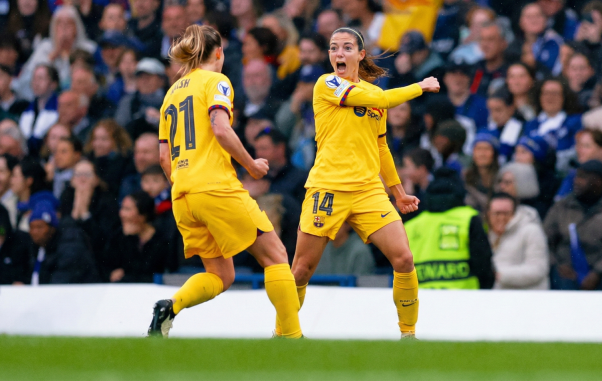
If you’re looking for a simple answer to “who is the best women footballer in the world,” it’s Aitana Bonmatí.
The 27-year-old Barcelona midfielder does things most players can’t. When opponents press high, she escapes with clever footwork, creates chances with precise passes, and slows everything down and controls the tempo amidst chaos.
Why She’s Number One
The Hardware:
- Third consecutive Ballon d’Or (September 2025) – official announcement
- Third straight FIFA Best Women’s Player (December 2025)
- UEFA Women’s EURO 2025 Player of the Tournament
- UEFA Women’s Champions League Player of the Season (2024/25)
The Numbers:
In the 2024/25 Champions League, Bonmatí recorded four goals and five assists, the most assists in the competition. That’s elite attacking production from a midfielder who also does the defensive work.
The Moment:
After being hospitalized with meningitis days before Euro 2025, Bonmatí recovered to play every knockout round match. Her 113th-minute goal against Germany sent Spain to the final.
“She reminds me of me, because we understand football the same way. If you put talent up against physicality, talent will always win.”
— Barcelona legend Xavi Hernández.
Best Women Footballers By Position
Instead of forcing every player onto a single ranked list, we’ve grouped the world’s elite by what they do best.
The Midfield Controllers

These players dictate tempo, break up attacks, and launch their team’s offense.
Alexia Putellas (Barcelona, Spain)
The two-time Ballon d’Or winner (2021, 2022) remains elite even after a serious knee injury. Putellas now plays more advanced, arriving late into the box to finish chances. In the current UEFA Women’s Champions League season, she ranks among the leaders in combined goals and assists.
Patri Guijarro (Barcelona, Spain)
While teammates grab headlines, Guijarro does the unglamorous work: winning second balls, closing passing lanes, and starting attacks.
UEFA named her to the Euro 2025 Team of the Tournament, recognizing her complete midfield control across Spain’s run to the final.
The Lethal Finishers
|
Player |
Club |
2024/25 Season Highlight |
Goals |
|
Clàudia Pina |
Barcelona |
UWCL Top Scorer |
10 |
|
Alessia Russo |
Arsenal |
UWCL Final goal scorer |
7 |
|
Ewa Pajor |
Barcelona |
UWCL top goals |
7 |
|
Khadija Shaw |
Man City |
WSL Golden Boot (shared) |
12 in 14 games |
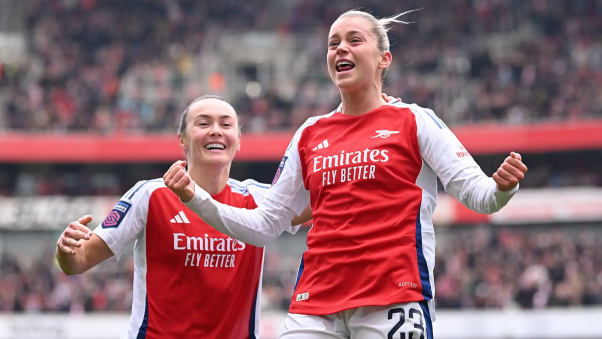
Alessia Russo (Arsenal, England)
The 25-year-old English striker had a season to remember. She scored seven Champions League goals, including crucial strikes in Arsenal’s stunning run to the title. The Gunners beat Barcelona 1-0 in the 2025 UWCL final (May 24, 2025).
Domestically, Russo shared the 2024/25 WSL Golden Boot with 12 league goals in 20 matches. Then in summer 2025, she helped England retain their European Championship, earning a spot in the UEFA Euro 2025 Team of the Tournament.
Clàudia Pina (Barcelona, Spain)
At just 24, Pina finished as the 2024/25 UEFA Women’s Champions League top scorer with 10 goals, officially confirmed by UEFA. She also topped all UEFA women’s competitions in 2025 with 17 total goals.
Her Specialty: Pina attacks the blindside, arriving early at cut-backs and scoring from set pieces. Even when she doesn’t start, she changes games off the bench.
Khadija “Bunny” Shaw (Manchester City, Jamaica)
Shaw’s numbers are ridiculous: 12 goals in just 14 WSL matches to share the 2024/25 Golden Boot. That’s nearly a goal per game.
Why Defenders Fear Her: Pure power and ruthless finishing. Shaw forces opponents to defend deeper, which opens space for teammates. When City need a goal, they look for Shaw.
Ewa Pajor (Barcelona, Poland)
Another European elite, Pajor scored seven UWCL goals in 2024/25. What makes her special is repeatability. She finds goals in different game situations (set attacks, transitions, rebounds) and consistently gets into dangerous scoring zones.
Career Achievement: Won the 2025 Women’s Gerd Müller Trophy (UEFA’s award for top scorer) after netting 43 goals in 46 appearances across all competitions.
The Creative Playmakers
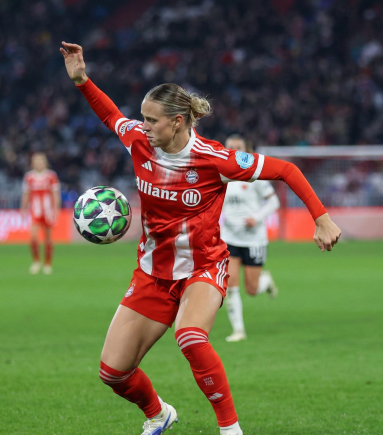
Klara Bühl (Bayern München, Germany)
Bühl made eight assists in six UWCL matches this season (2025/26 early phase). That’s more than one assist per game at Europe’s highest level.
She creates chances through varied crossing angles, high-volume delivery, and the ability to beat defenders without needing perfect overlapping runs.
Caroline Graham Hansen (Barcelona, Norway)
One of the world’s best wide players for years, Graham Hansen combines elite 1v1 dribbling with world-class crossing and cut-backs.
This season (2025/26 Liga F), she’s registered five goals and five assists, showing both her finishing and creation abilities.
Previous Success: Key player in Wolfsburg’s elite attack before joining Barcelona, where she’s won multiple Champions League titles.
Caroline Weir (Real Madrid, Scotland)
Weir controls the attacking midfield corridor like few others. She receives on the half-turn, delivers early passes behind full-backs, and arrives to finish from the edge of the box.
Current Form: Five goals and two assists in seven UWCL matches (2025/26 early phase). That goal-per-game rate from midfield is exceptional.
The Explosive Wingers
Kadidiatou Diani (Lyon, France)
Diani finished as the 2023/24 UWCL top scorer with eight goals, officially recognised by both ESPN and UEFA. Her explosive carrying, direct running, and end-product make her one of Europe’s most dangerous wide forwards.
Linda Caicedo (Real Madrid, Colombia)
At just 20 years old, Caicedo is already one of the world’s most dangerous transition players. This UWCL season, she’s recorded two goals and four assists for Real Madrid.
Melchie Dumornay (Lyon, Haiti)
UEFA named Dumornay the 2024/25 UWCL Young Player of the Season, for the second consecutive year. That repeat recognition from experts signals more than hype.
The Defensive Anchors
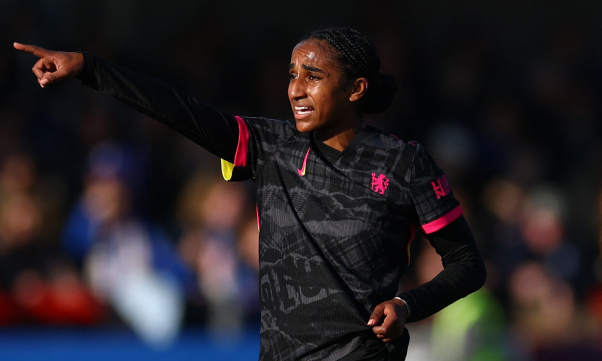
Naomi Girma (Chelsea, USA)
In January 2025, Chelsea paid San Diego Wave $1.1 million for Girma, making her the first women’s footballer ever transferred for over $1 million, according to widespread reports from ESPN and other major outlets.
Why would a club pay record money for a defender?
Because USA coach Emma Hayes (formerly Chelsea manager) called Girma “the best defender I’ve ever seen. Ever.”
Irene Paredes (Barcelona, Spain)
The Spanish center-back brings essentials: aerial dominance, organizational leadership, and calm distribution under pressure.
UEFA selected her for the Euro 2025 Team of the Tournament, recognizing her consistent defending across Spain’s run to the final.
Lucy Bronze (Chelsea, England)
One of the best full-backs of her generation, Bronze combines defensive reliability with tactical intelligence and leadership.
Also named to the Euro 2025 Team of the Tournament after helping England successfully defend their European title.
The Game-Saving Goalkeepers
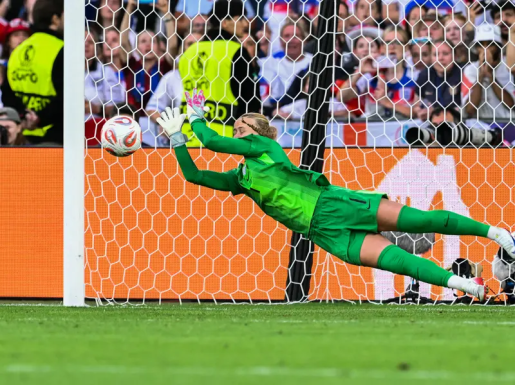
Hannah Hampton (Chelsea, England)
Modern elite goalkeeping requires more than shot-stopping. It demands perfect positioning, composed passing under pressure, and psychological strength in penalty shootouts.
Hampton delivered all of this in 2025:
The moment that defined her year:
In the Euro 2025 final penalty shootout against Spain, Hampton saved two consecutive Spanish penalties, including one from Aitana Bonmatí. England won the shootout 3-1 to retain their European title. Watch highlights
By The Numbers: Hampton kept 13 clean sheets in Chelsea’s unbeaten 2024/25 WSL campaign and made decisive shootout saves with England at Euro 2025.
Best Women Footballers Outside Europe
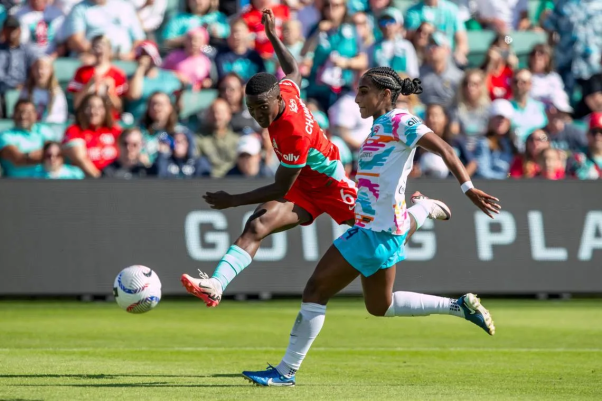
Temwa Chawinga (Kansas City Current, Malawi)
The NWSL’s most dominant attacker of the past two seasons, Chawinga made history in 2025.
Record-breaking numbers:
Sophia Smith (Portland Thorns, USA)
Smith combines world-class acceleration with efficient finishing.
Achievements:
- 2023 NWSL Golden Boot (11 goals in 17 games)
- Three consecutive NWSL Best XI selections (2022, 2023, 2024)
Quick Comparison: Top Scorers 2024/25
|
Player |
Competition |
Goals |
Games |
|
Clàudia Pina |
UCWL |
10 |
– |
|
Alessia Russo |
UCWL |
7 |
– |
|
Ewa Pajor |
UCWL |
7 |
– |
|
Khadija Shaw |
WSL |
12 |
14 |
|
Alessia Russo |
WSL |
12 |
20 |
|
Temwa Chawinga |
NWSL |
15 |
23 |
Source: UEFA official statistics, WSL records, NWSL official reports
Why “Best In The World” Is Easier To Debate Now
A generation ago, debating the “best women footballers” meant relying on limited data and fragmented coverage. Today, the infrastructure exists to make informed comparisons:
Better competitions:
The UEFA Women’s Champions League has become the gold standard for comparing players across different leagues. When Barcelona’s stars face Arsenal’s or Lyon’s in knockout rounds, we see direct quality comparisons.
Transparent awards:
UEFA’s season awards and official statistics provide reliable context. When experts name a Team of the Tournament for Euro 2025 or Champions League Player of the Season, those selections carry weight.
Expert analysis:
Publications like The Guardian’s Top 100 Women Footballers (December 2025) use transparent voting from global experts. They ranked Aitana Bonmatí #1, with Mariona Caldentey and Alessia Russo in the top three.
Historical context:
The Ballon d’Or Féminin launched in 2018, giving women’s football a standardised year-by-year comparison point. Before that, “world’s best” debates had no formal framework.
The Evolution Continues
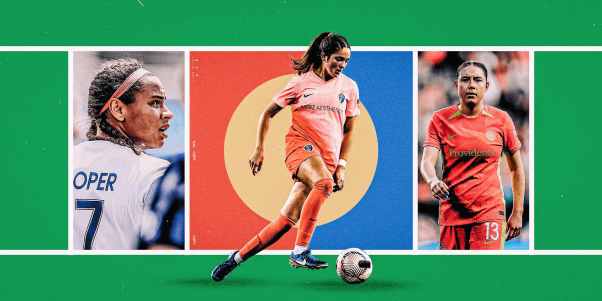
Women’s football has the infrastructure: competitions, data, awards, expert voting, to make “best in the world” debates more evidence-based than ever before.
As the 2025/26 season progresses, these rankings will shift. Young players like Melchie Dumornay and Linda Caicedo continue developing. Veterans like Alexia Putellas and Lucy Bronze maintain elite form. And Aitana Bonmatí keeps solving problems that stop everyone else.
The beautiful part is, in five years, an entirely new generation might dominate these lists. The talent pipeline has never been stronger.
Want to stay updated? Bookmark this page, we update these rankings monthly as the season develops.




One Comment