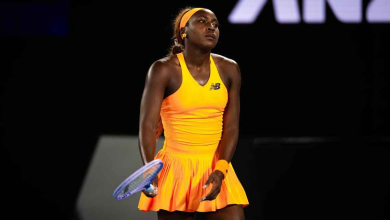

Men play best-of-five sets and women play best-of-three at Grand Slams due to a 1901 decision by an all-male governing body, not physical limitations. Women successfully competed in five-set matches from 1891-1901, and research shows they excel at endurance. The format persists today for commercial reasons: men’s matches historically generate higher ticket sales and TV ratings, whilst extending women’s matches would require longer tournaments or fewer prime-time men’s slots.
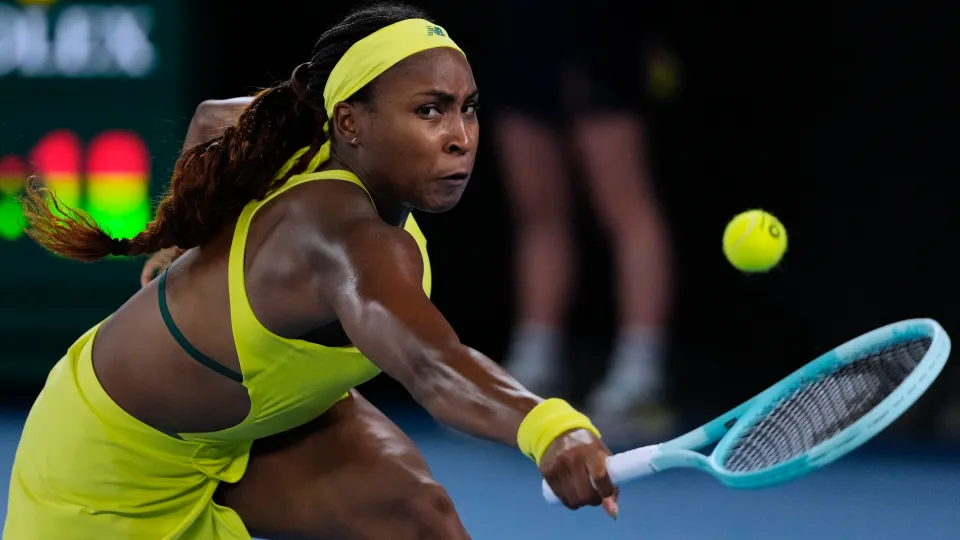
Walk into any Grand Slam tournament, and you’ll witness a peculiar double standard playing out on adjacent courts. Men compete in five gruelling sets, whilst women compete in a best-of-three format.
The official explanation? Well, there isn’t really one.
Why is men’s tennis 5 sets and women’s 3?
The uncomfortable truth is that this format difference has nothing to do with physical capability and everything to do with commercial priorities and historical inertia. Women proved they could play five-set matches over a century ago, yet here we are in 2025, still treating them differently.
The history Tennis doesn’t want you to remember
Women competed in best-of-five set matches from 1891 to 1901 at the United States national championships. The New York Times described the 1891 clash between Mabel Cahill and Ellen Roosevelt as “fought to the end with wonderful tenacity.” These women were delivering competitive, compelling tennis.
Then, in 1901, the all-male United States National Lawn Tennis Association Council decided that women should play only three sets. Not because of any evidence that the longer format was problematic, but simply because they decided it was appropriate. Sound familiar? It’s the same paternalistic thinking that banned women from the 800-metre race from 1928 to 1960 and prohibited women’s football from 1921 to 1970.
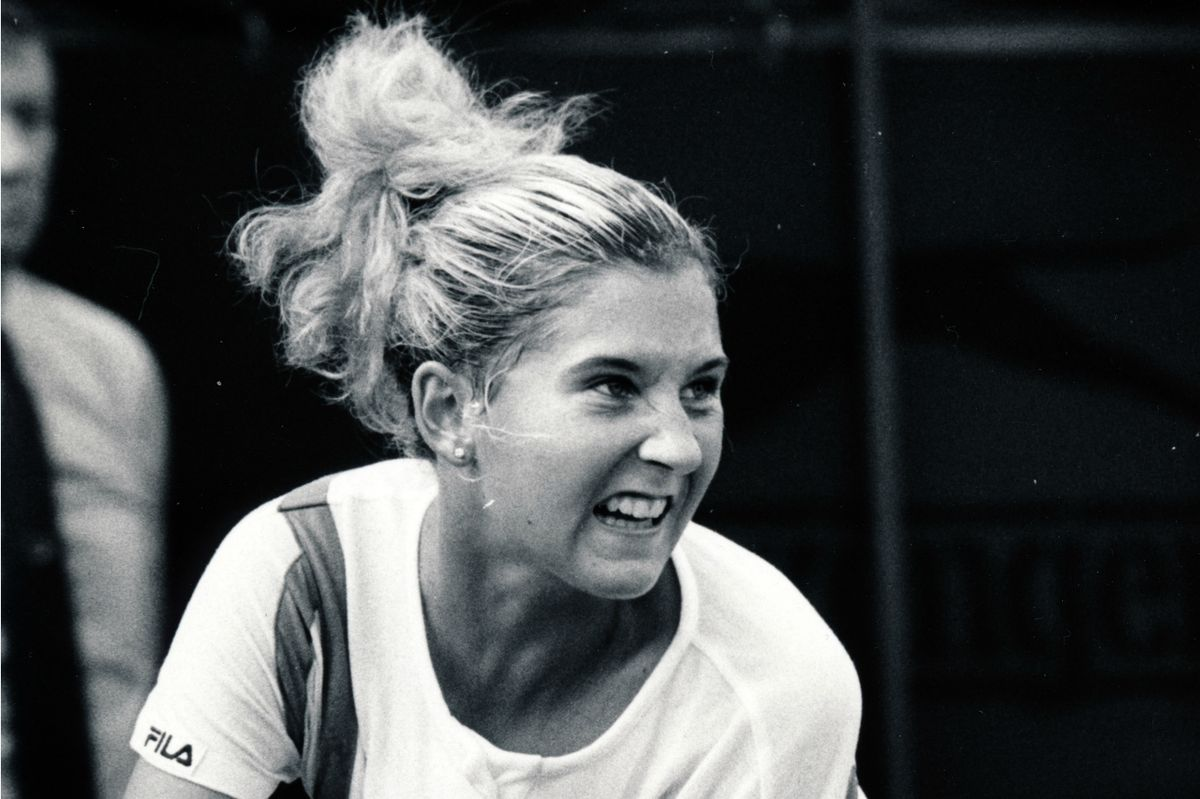
The Women’s Tennis Association brought back best-of-five sets for their season-ending finals from 1984 to 1998. Monica Seles and Gabriela Sabatini delivered an epic five-setter at Madison Square Garden in 1990 that tennis fans still reference today. The matches worked, players competed at the highest level, yet the format disappeared anyway.
What Andy Murray gets right about the debate
Former world number one Andy Murray has been among the few male players willing to address this disparity candidly. “If the women were asked to play five-set matches, I’m sure they would be more than capable and more than willing to do that,” Murray told reporters at Wimbledon in 2023. “But I don’t think it’s their decision… so that’s the end of the argument, for me.”

Murray’s assessment cuts to the heart of the issue. This isn’t a question of whether women can handle the physical demands; they demonstrably can. It’s a question of who holds the power to make decisions about women’s tennis and what factors they prioritise in those decisions.
Science destroys the endurance myth
If you still hear people suggesting women lack the stamina for five-set tennis, point them to the research. A peer-reviewed study on the 46-kilometre Manhattan Island Marathon Swim found that the top 10 fastest times ever recorded belonged to women, who completed the course 12-14% faster than the top 10 men. In ultra-distance swimming in cold water (below 20°C), women’s physiological advantages become pronounced.
Research consistently shows that whilst men typically possess greater absolute strength, women demonstrate superior endurance capacity. In ultra-distance events, the performance gap between men and women narrows significantly, and in some cases disappears entirely. The longer the event, the better women perform relative to men.
Professor Sophia Nimphius of Edith Cowan University, a former consultant for the WTA, notes that preparation and recovery management for women in tennis has improved dramatically since the 1990s. “The physiology of women could handle longer events,” she states plainly in research published in The Conversation. “Evidence supports women might be built for it.”
The commercial reality nobody discusses publicly
The reason men play five sets at Grand Slams isn’t about showcasing superior athleticism, but about maximising revenue from the matches that historically sell more tickets and attract higher television ratings.
Men’s tennis, on average, generates higher ticket sales and viewership numbers than women’s matches. There are notable exceptions: Serena Williams, Venus Williams, and, increasingly, players like Iga Świątek and Coco Gauff command audiences comparable to those of top male players. But across the broader field, men’s matches typically draw larger crowds.
Extending women’s matches to five sets would create a scheduling nightmare for tournament organisers. Either tournaments would need to run longer (increasing operational costs significantly), or fewer men’s matches would occupy prime show court slots (reducing revenue from their most marketable product). The Australian Open’s 2025 prize pool reached A$96.5 million, with equal payouts of A$3.5 million for men’s and women’s singles champions. That kind of money focuses minds on commercial considerations.
The equal pay argument falls apart under scrutiny
Critics who argue women shouldn’t receive equal prize money because they play shorter matches fundamentally misunderstand how sports economics work. By that logic, footballers who win 1-0 in 90 minutes should earn less than those who play 120 minutes of extra time. Dominant tennis players who win in straight sets should get paid less than those who struggle through five.
All four Grand Slam tournaments have offered equal prize money since 2007, acknowledging that elite athletes deserve equal compensation regardless of match duration. Yet lower-tier tournaments continue to pay women less, often using the format difference as convenient justification.
The reality is, prize money isn’t calculated on an hourly wage basis. It reflects the value athletes bring to an event, the audiences they attract, and the prestige of the competition. If it were truly about time on court, tournament organisers would present detailed financial analyses explaining exactly why the format difference justifies unequal pay at smaller events. They don’t, because that argument doesn’t hold up to scrutiny.
What players actually want
The most frustrating aspect of this entire debate is that nobody in positions of power seems interested in asking women players what they want. When Australian Open officials briefly considered introducing best-of-five finals for women in 1994, the discussion happened around female athletes, not with them.
Current WTA stars rarely have their preferences on record, but when they do speak, the pattern is clear: they’re capable, they’re willing, and they’re frustrated by the lack of agency. The decision about women’s match format continues to be made primarily by tournament directors, television executives, and governing bodies, not by the athletes themselves.
This isn’t about forcing an unwanted format on reluctant players. It’s about acknowledging that women deserve the same platform to showcase their mental toughness, physical endurance, and competitive spirit across five sets. It’s about giving them the choice.
A question worth asking: Should men play fewer sets?
Perhaps men shouldn’t be playing best-of-five either. Research on five-set matches suggests that aspects of performance can plateau during middle sets, with players conserving energy for a potential final set. First-serve velocity follows a parabolic pattern, meaning that the third and fourth sets sometimes become tactical holding patterns rather than peak competitive periods.
In an era when sports increasingly cater to shorter attention spans, Twenty20 cricket, four-quarter basketball, and 90-minute football matches, does tennis’s insistence on potentially five-hour marathons serve the sport’s best interests? The format difference might say less about what women should be playing and more about whether five sets remains the optimal format for anyone.
The Path forward
So why is men’s tennis 5 sets and women’s 3 sets? Because more than a century ago, men in positions of power decided it should be that way, and the commercial structure of professional tennis has calcified around that decision. Women have proven repeatedly that they can compete in longer formats. Science supports their endurance capacity. The only barrier is institutional unwillingness to disrupt a profitable status quo.
Tennis could start small:
- Offer best-of-five for Grand Slam finals only.
- Develop a player-choice system in which athletes opt into longer formats if they prefer.
- Survey WTA players about their preferences and publish the results.
Any of these steps would be progress.
Until then, this disparity will remain what it has always been: not a reflection of athletic capability, but a reminder of who holds decision-making power in tennis and what they choose to prioritise when they wield it.
What do you think? Should Grand Slam tournaments offer women the option to play best-of-five sets? Share your perspective in the comments below.