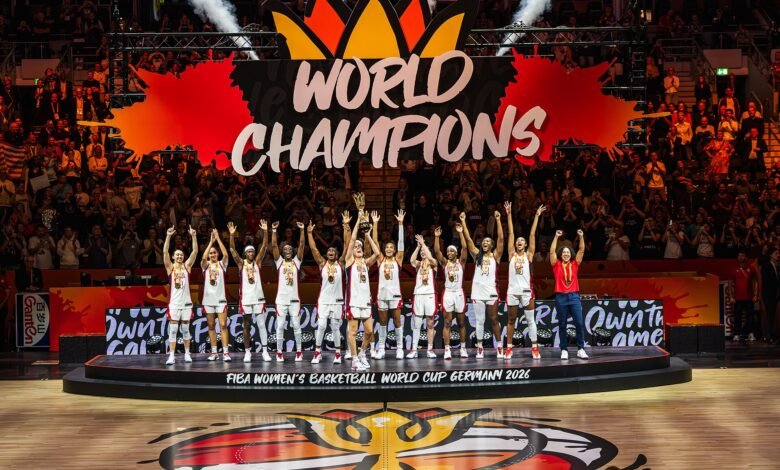
USA won the Women’s Basketball World Cup 2026 after beating France 97–79 in Berlin on September 13. The result gave the Americans their fifth straight title and 12th overall.
However, the final score does not tell the full story. France built a 14-point lead before USA fought back. Breanna Stewart and Jackie Young then helped the defending champions finish the job in front of 12,223 fans.
The official FIBA title report confirms the result and the main achievements from the final.
USA Women’s Basketball World Cup 2026: Final at a Glance
| Final | USA 97–79 France |
|---|---|
| Date | September 13, 2026 |
| Host city | Berlin, Germany |
| Gold medal | USA |
| Silver medal | France |
| Bronze medal | Spain |
FIBA’s final-day schedule placed both medal games on Sunday, September 13. The championship game brought together USA and France, who had also met in the Paris 2024 Olympic gold-medal game.
How USA Turned the Final Around
France makes the stronger start
France moved ahead early and led by 14 points near the start of the second quarter. At that stage, USA had a sizeable gap to close.
But the Americans scored 26 points in the second quarter. Caitlin Clark hit a three-pointer just before halftime, cutting France’s lead to 45–43.
The third quarter changes the game
After the break, USA added 30 points in the third quarter and took control. They eventually won by 18 points.
That swing matters when reading the result. France had put the champions under pressure, yet USA recovered before pulling away. FIBA’s full comeback report explains the key stages of the game.
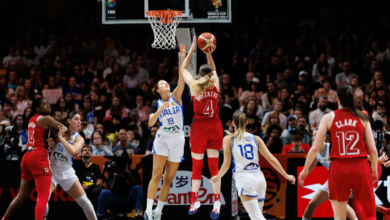
The win also extended USA’s unbeaten run in the competition to 36 games. Clark and Paige Bueckers both finished the event with their first senior national-team gold medals.
Breanna Stewart Leads USA’s World Cup Win
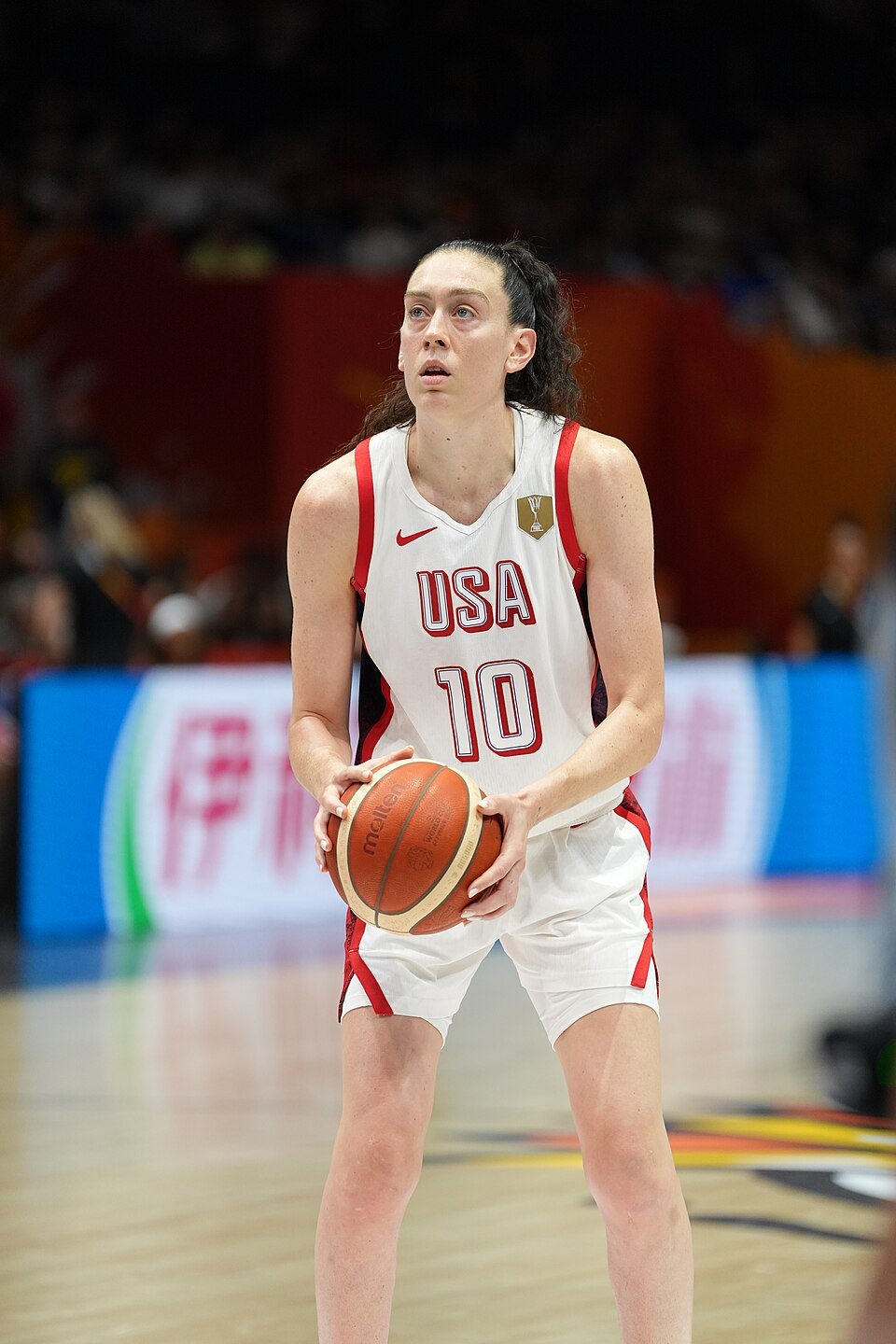
Stewart finished the final with 22 points and 10 rebounds. That is a double-double: reaching at least 10 in two major statistical categories.
She also won the tournament’s TISSOT Most Valuable Player award. Having earned the same award in 2018, she became the first player to win it twice.
Across the event, Stewart averaged:
- 12.8 points per game.
- 7.3 rebounds per game.
- 2.8 assists per game.
In other words, her contribution went beyond scoring. Rebounds help a team gain possession after missed shots, while assists are passes that directly lead to baskets.
Jackie Young adds another strong performance
Young contributed 18 points, six rebounds and five assists in the final. She also joined Stewart in the tournament’s All-Star Five.
FIBA selected Gabby Williams, Iyana Martin and Leonie Fiebich alongside the two Americans. The official MVP announcement provides their tournament statistics and awards.
USA’s Route Through the Women’s Basketball World Cup 2026
USA finished the tournament with six wins and no defeats. However, the size of those wins varied sharply.
| Stage | Opponent | USA result |
|---|---|---|
| Group D | China | Won 94–61 |
| Group D | Italy | Won 55–52 |
| Group D | Czechia | Won 105–64 |
| Quarterfinal | Hungary | Won 108–56 |
| Semifinal | Spain | Won 76–66 |
| Final | France | Won 97–79 |
The three-point win over Italy was their closest result. By contrast, they beat Hungary by 52 points in the quarterfinals.
Next, a 10-point victory over Spain secured their place in the final. FIBA’s official results and standings list all six games.
For more on that close group game, read our report on USA’s 55–52 win over Italy.
France Takes Silver After a Historic Run
Despite losing the final, France achieved its best finish at the Women’s Basketball World Cup. This was its first appearance in the title game.
Meanwhile, Gabby Williams added an individual award to her silver medal. FIBA named her the tournament’s Best Defensive Player.
Williams averaged 2.8 steals per game and regularly defended the other team’s leading attacking player. A steal happens when a defender takes possession away from an opponent.
She had also won the defensive award at the Paris 2024 Olympics. FIBA’s report on Williams’ award highlights her ball pressure and work on defense.
Her recognition shows why France’s campaign deserves attention beyond the final defeat. The team reached a new level in the competition, while one of its leading players earned a major award.
Spain Wins Bronze as Iyana Martin Shines
Earlier on the final day, Spain beat Germany 81–58 to take bronze.
Iyana Martin led the way with 22 points, nine assists and four rebounds. At 20, she completed her first Women’s World Cup with a medal.
Spain also received 15 points from Raquel Carrera. In addition, Awa Fam contributed 10 points and nine rebounds.
The result returned Spain to the podium after the team missed the 2022 tournament. It followed silver in 2014 and bronze medals in 2010 and 2018.
FIBA’s bronze-medal game report details Spain’s win. Germany finished fourth, its best result in the event.
Berlin Sets a New Attendance Mark
The tournament also drew large crowds. FIBA reported a total attendance of 236,015 across 36 games in Berlin.
That exceeded the 145,519 attendance recorded across 38 games at the 2022 event in Sydney. Berlin’s average was 6,556 spectators per game.
These are total game attendances, rather than a count of unique people. A supporter attending several games can therefore contribute more than once to the total.
FIBA described Berlin as the most-attended Women’s World Cup of the modern era. Its attendance report also explains the historical limits of comparisons with early editions.
What USA’s World Cup Title Means
USA finished the Women’s Basketball World Cup 2026 unbeaten and kept the title for a fifth straight edition. Yet the close Italy game and France’s early lead show that the champions faced real tests.
Stewart’s second MVP award added another milestone, while France left Berlin with its best-ever finish. Spain completed the medal places.
New to the sport? Our guide to women’s basketball rules and positions explains the basics behind the action.
Featured image: USA’s trophy ceremony in Berlin on September 13, 2026. Photo: Zafer Batık / Wikimedia Commons, CC BY-SA 4.0. Resized.



.JPG)
.jpeg)